
Jul 24, 2026
BlogWhy Cybersecurity Is a Business Decision, Not Just IT
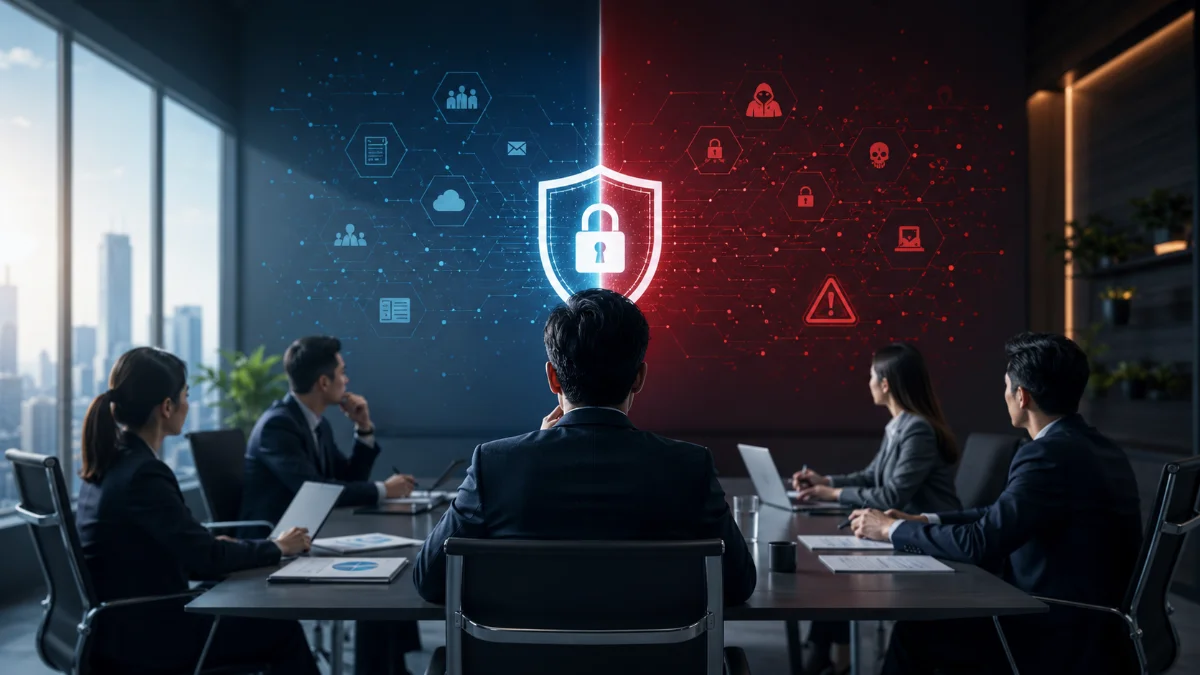
Cybersecurity is no longer just about technology
For many years, cybersecurity was viewed as the responsibility of the IT department.
As long as computers were running, antivirus software was installed, and firewalls were in place, many business leaders believed everything was under control.
That is no longer true.
Today's cyberattacks target the business itself – not just its technology.
A successful attack can stop operations, interrupt customer services, delay payments, expose sensitive information, and damage years of trust.
This is why cybersecurity is no longer an IT problem.
It is a business decision.
Quick Answer
Why is cybersecurity a business decision?
Cybersecurity protects the systems, people, and information that keep a business running. Decisions about cybersecurity affect revenue, customer trust, legal compliance, business continuity, and company reputation. That makes cybersecurity a leadership responsibility – not just an IT task.
What is business cybersecurity?
Business cybersecurity means protecting everything that allows a company to operate successfully.
This includes:
- Employees
- Customer information
- Financial systems
- Cloud applications
- Business operations
- Company reputation
The goal is not simply to stop hackers.
The goal is to keep the business running safely.
Cyberattacks create business problems
Many people think cyberattacks only affect computers.
In reality, they often affect the entire organization.
For example:
A finance employee receives a fake email that appears to come from the CEO. Money is transferred to a criminal's bank account. No servers are damaged. No computers stop working. Yet the business loses money.
Another example:
An employee's Microsoft 365 account is compromised. The attacker reads confidential emails for weeks before anyone notices. Again, there may be no virus. But the business suffers. Technology is only one part of the problem. Business impact is much larger.
The real cost of a cyberattack
A cyber incident can affect many areas of a business.
Financial loss
- Business interruption
- Fraud
- Recovery costs
- Lost revenue
Customer trust
Customers expect their information to remain secure.
A breach may cause clients to lose confidence.
Reputation
News about cyber incidents spreads quickly.
Recovering trust often takes much longer than recovering systems.
Compliance
Many countries require businesses to investigate incidents and report certain data breaches to regulators within specific timeframes.
Failure to comply may result in penalties.
Employee productivity
When systems become unavailable, employees cannot do their jobs efficiently.
Why CEOs should be involved
Cybersecurity decisions affect:
- Business growth
- Investment priorities
- Customer relationships
- Operational resilience
- Risk management
These are leadership responsibilities.
A CEO does not need to understand technical details.
But every CEO should understand:
- What the biggest cyber risks are
- Which systems are most important
- How quickly the business can detect attacks
- How quickly it can recover
Cybersecurity should support business goals
Good cybersecurity is not about buying more tools.
It is about supporting business objectives.
For example:
If your company is expanding internationally...
Security builds customer confidence.
If your company works with enterprise customers...
Security helps meet supplier requirements.
If your company manages sensitive information...
Security reduces legal and financial risks.
Cybersecurity should help the business grow – not slow it down.
The role of AI in modern business cybersecurity
Today's businesses face thousands of security events every day.
People cannot investigate everything manually.
AI helps by:
- Detecting unusual activity
- Prioritizing important incidents
- Explaining alerts clearly
- Recommending response actions
- Reducing investigation time
This allows business leaders to make informed decisions more quickly.
How ShieldNet Defense helps business leaders
ShieldNet Defense was built for modern businesses – not just IT teams.
It protects endpoints, cloud services, identities, email, SaaS applications, and Kubernetes workloads through one unified platform.
Everything follows a simple business-focused workflow.
Detect
Continuously monitor your business environment to identify suspicious behavior before it becomes a major incident.
Analyze
AI Agents automatically investigate events, connect related activities, determine business impact, and explain incidents in plain language.
Business leaders see what happened – not pages of technical logs.
Respond
ShieldNet Defense can automatically or intelligently:
- Block malicious activity
- Stop ransomware
- Revoke compromised user sessions
- Isolate affected devices
- Guide recovery
This helps businesses reduce downtime and continue operating with confidence.
Business cybersecurity is everyone's responsibility
Cybersecurity is not only about technology.
It involves:
- Leadership
- Employees
- Business processes
- Risk management
- Continuous improvement
When cybersecurity becomes part of business strategy, companies become more resilient and better prepared for future growth.
Key Takeaways
- Cybersecurity protects businesses – not just computers.
- Cyberattacks create financial, operational, and reputational risks.
- CEOs should treat cybersecurity as a business priority.
- AI helps businesses make faster and better security decisions.
- ShieldNet Defense enables businesses to Detect → Analyze → Respond through AI-powered protection built for SMEs.
Frequently Asked Questions
Why is cybersecurity a business issue?
Because cyberattacks affect revenue, customers, reputation, and business continuity – not just IT systems.
Does the CEO need cybersecurity expertise?
No. CEOs need to understand business risks and ensure the company has the right security strategy.
How does cybersecurity support business growth?
Strong cybersecurity builds customer trust, supports compliance, and helps businesses win larger customers.
Can AI improve business cybersecurity?
Yes. AI helps detect threats faster, explain incidents clearly, and reduce response time.
How does ShieldNet Defense support business leaders?
ShieldNet Defense continuously detects, analyzes, and responds to threats while explaining incidents in business language, helping leaders make informed decisions quickly.
Ready to make cybersecurity a business advantage?
Discover how ShieldNet Defense helps SMEs protect their operations with AI-powered Detect → Analyze → Respond.
Related Articles

Oct 22, 2026
Real or Fake? HR Asking You to Review Payroll
Got an email from HR asking you to review payroll? Learn how to identify fake payroll emails, verify HR requests, and protect your salary and bank details.
Oct 9, 2026
I replied to a phishing email. Am I at risk?
Replied to a phishing email? Learn what risks you face, what attackers can learn from your reply, and what to do next to protect your account and business.
Oct 8, 2026
Real or Fake? How to verify a sharepoint file invitation
Received a SharePoint file invitation? Learn how to spot fake SharePoint emails, verify shared files safely, and protect your Microsoft 365 account from phishing.

Protect your business with ShieldNet 360
Get started and learn how ShieldNet 360 can support your business.