
Jun 11, 2026
BlogLive Threat Intelligence for SMEs: What It Is and How It Helps
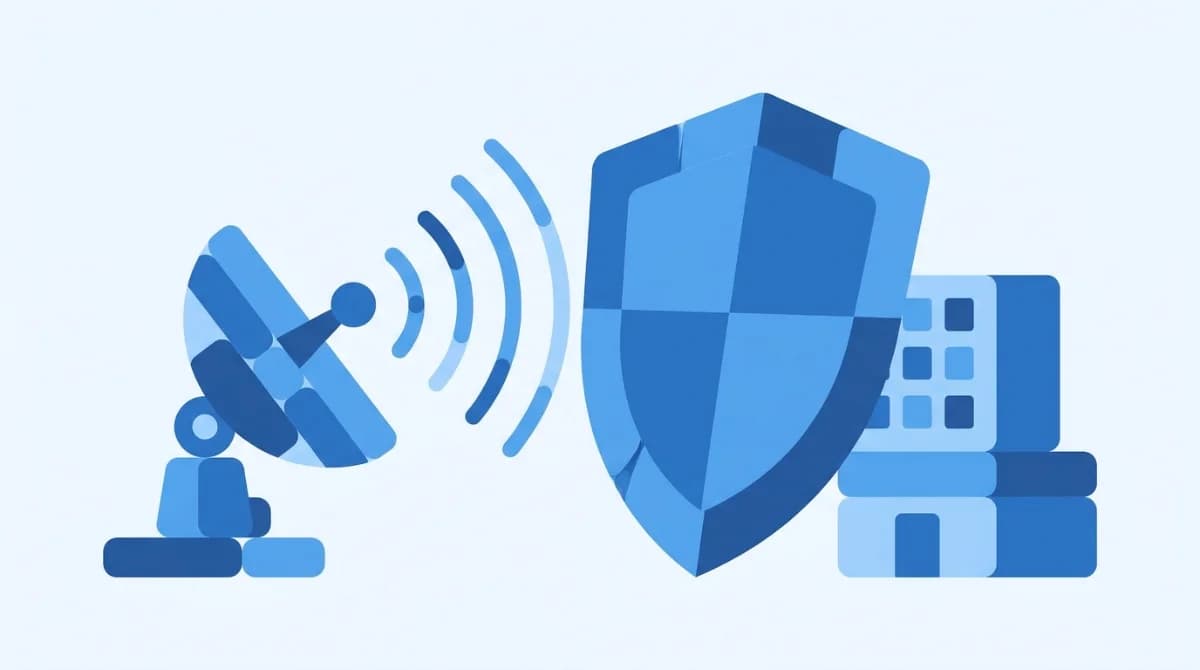
Threat intelligence is information about active cyber threats – which attacks are happening right now, who's behind them, and what they look like – turned into action: blocking known-bad senders, IP addresses, and files before they reach you. For small businesses, it means inheriting the awareness of a global security team without hiring one.
Every minute, somewhere in the world, an attack hits a business and leaves fingerprints: a malicious file, a phishing domain, a server address. Threat intelligence is the practice of collecting those fingerprints globally and using them to protect everyone else – so the scam that hit a company in Texas this morning gets blocked at your door this afternoon. Here's what that means in plain English, what it costs, and how an SME can use it without a single analyst on payroll.
What is threat intelligence?
Cyber threat intelligence (CTI) is the collection and analysis of data about attackers and their methods, processed into something a defender can act on. As Gartner defines it, threat intelligence is "evidence-based knowledge that provides context, mechanisms, indicators, and action-oriented advice on both existing and emerging threats."
Strip the jargon and it's three questions, answered continuously:
- Who is attacking businesses like mine? (ransomware crews, invoice fraudsters, credential thieves)
- What do their attacks look like? (the email addresses, links, files, and server addresses they use)
- What should my defenses do about it? (block this sender, quarantine that file, flag this login)
What does "live" threat intelligence mean?
Threat intelligence comes in two layers, and you need both:
Live intelligence is the current stream – threats observed in the last minutes and hours. When a new phishing domain starts sending fake invoices, it gets reported into shared threat feeds, and defenses that consume those feeds start blocking it within hours, often before it ever reaches your staff.
Historical data is the memory – years of recorded attack patterns. It's what lets a security system say "this login pattern matches how account takeovers usually start" even when the specific attacker has never been seen before.
The two layers cover each other's blind spots. Live feeds are fast but shallow – they only know threats someone has already seen and reported. Historical data is deep but slower – it spots the shape of an attack even when every individual piece looks new. A defense running both can block a known phishing domain on sight and flag a never-seen-before login from a new country at 3am because it doesn't match two years of normal behavior for that account.
A concrete example: a clinic's bookkeeper receives an invoice from a "supplier" – same logo, same tone, new bank details. A defense armed with live intel recognizes the sending domain was registered 48 hours ago and already reported in two other fraud attempts. The email never reaches the inbox. That's threat intelligence working: someone else's bad morning becomes your non-event.
Why does a small business need threat intelligence?
Because attackers don't check company size before pressing send. Credential misuse was the top way attackers got in, featuring in roughly 40% of breaches (Verizon DBIR), and most of those campaigns are automated – they hit ten thousand small businesses as easily as one bank. Meanwhile the cost of getting it wrong keeps climbing: IBM's Cost of a Data Breach research put the global average at $4.88 million in 2025. An SME doesn't absorb a fraction of that and shrug.
"We're too small to be a target" is the most expensive assumption a business can make. Small businesses are targeted because they're small: valuable data, thinner defenses, no one watching at 2am. Threat intelligence is the counterweight – it lets a 30-person company benefit from attacks observed across millions of endpoints worldwide.
What are the types of threat intelligence – and which matter to you?
Security vendors traditionally split threat intelligence into three (sometimes four) levels. Here's the translation:
Type | What it is | Who actually uses it | Matters to an SME? |
|---|---|---|---|
Tactical | The raw indicators: bad IPs, domains, file fingerprints (IOCs) | Your security tools, automatically | Yes – but only if something consumes it for you |
Operational | How specific attack campaigns work (the attackers' TTPs – tactics, techniques, procedures) | Security analysts tuning defenses | Indirectly – via your provider |
Strategic | Big-picture trends for boardroom decisions | CISOs at large companies | Rarely – a yearly summary is plenty |
The honest answer for a small business: tactical intelligence does the daily protecting, and you should never have to read it. If your "threat intelligence" arrives as a PDF you're supposed to study, something's mis-sold.
How does threat intelligence actually work?
Three pieces of jargon, translated once:
- Threat feed – a continuously updated list of known-bad things (addresses, domains, file fingerprints), shared between security vendors and researchers. Think of it as a neighborhood watch for the internet – useful only if someone is actually watching.
- IOC (indicator of compromise) – one entry on that list. A fingerprint an attack leaves behind.
- IOC matching – your defenses comparing everything that touches your network (emails, connections, files) against the list, in real time.
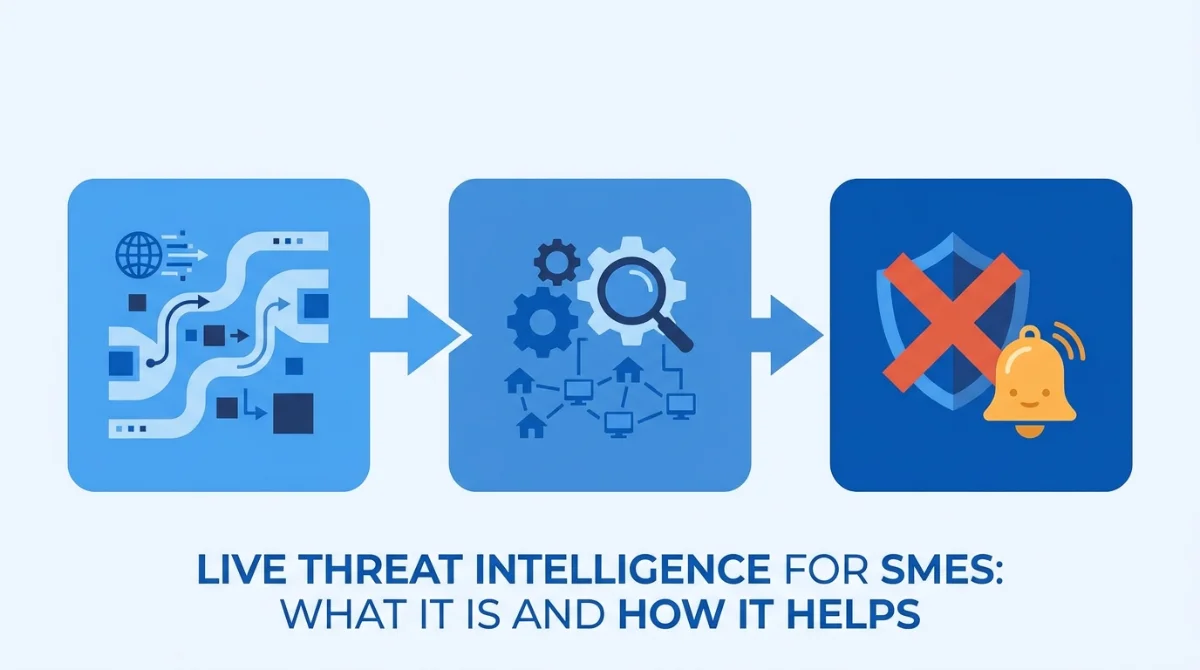
The working loop is simple: feed in → match against your traffic → block or alert. When the match engine spots a known-bad item, it blocks automatically; when it spots something suspicious but new, historical data and behavioral analysis decide whether to raise an alert. That second half matters – pure feed-matching misses brand-new threats, which is why intel works best paired with real-time threat detection without hiring analysts and behavioral analysis. If you're curious how the AI side makes those judgment calls, we've covered how AI threat detection works and when to trust it.
How much does threat intelligence cost for a small business?
Here's the answer most vendors bury: standalone threat intelligence platforms are enterprise products at enterprise prices – commercial CTI subscriptions routinely run into six figures annually, which is why the "how much does CTI cost" question scares SMEs off. Buying raw feeds yourself also buys you the job of doing something with them.
The SME path is different: get threat intelligence bundled inside a managed protection service, where the provider pays for the feeds, does the matching, and acts on the results – and you pay one predictable monthly fee. If you're weighing a dedicated tool anyway, here's when an SME actually needs a threat intelligence platform – short version: later than the vendors suggest.
How do you use threat intelligence without a security team?
You don't operate it – you subscribe to its outcomes. A managed 24/7 service like ShieldNet Defense consumes live threat feeds and historical attack data on your behalf, matches them against your environment around the clock, and turns the result into two things an SME can actually use: automatic blocking of known threats, and plain-language alerts for anything that needs a human decision. The intelligence stays invisible; the protection doesn't.
That's the test to apply to any vendor: don't ask "do you have threat intelligence?" (everyone says yes). Ask "who acts on it at 2am, and what will I see the next morning?" A good answer names the action ("we isolate the device and block the sender automatically") and the report ("you get a plain-language summary: what happened, what we did, what – if anything – you need to decide"). A bad answer hands you a dashboard and wishes you luck.
FAQ
What is threat intelligence in simple words?
It's shared knowledge about active cyber attacks – who's attacking, what their attacks look like, and how to block them – collected globally and used to stop the same attacks before they reach you.
What are the four types of threat intelligence?
Tactical (raw indicators your tools consume), operational (how attack campaigns work), strategic (big-picture trends for leadership), and – in the four-type model – technical (the deep specifics of malware and infrastructure). For a small business, tactical intelligence consumed automatically by your defenses does most of the real work.
How much does threat intelligence cost?
Standalone commercial platforms typically cost tens to hundreds of thousands per year – enterprise territory. Small businesses get the same protective benefit through managed security services that include threat intelligence in a flat monthly fee.
Do small businesses really need threat intelligence?
Yes – but not as a product to operate. Attacks on SMEs are mostly automated and reuse known infrastructure, which is exactly what threat intelligence catches. The practical move is choosing a security service that consumes intel for you, not buying feeds to read yourself.
Turn global threat data into your quiet mornings
Threat intelligence only matters if something acts on it – every minute, including the ones when your business is asleep. ShieldNet Defense pairs live threat intelligence and historical attack data with 24/7 automated detection and response, then reports what happened in plain English. Get the awareness of a global security team – without hiring one.
Related Articles

Oct 22, 2026
Real or Fake? HR Asking You to Review Payroll
Got an email from HR asking you to review payroll? Learn how to identify fake payroll emails, verify HR requests, and protect your salary and bank details.

Oct 9, 2026
I replied to a phishing email. Am I at risk?
Replied to a phishing email? Learn what risks you face, what attackers can learn from your reply, and what to do next to protect your account and business.
Oct 8, 2026
Real or Fake? How to verify a sharepoint file invitation
Received a SharePoint file invitation? Learn how to spot fake SharePoint emails, verify shared files safely, and protect your Microsoft 365 account from phishing.

Protect your business with ShieldNet 360
Get started and learn how ShieldNet 360 can support your business.