
Mar 12, 2026
BlogThreat intelligence platform: When SMEs need one in 2026
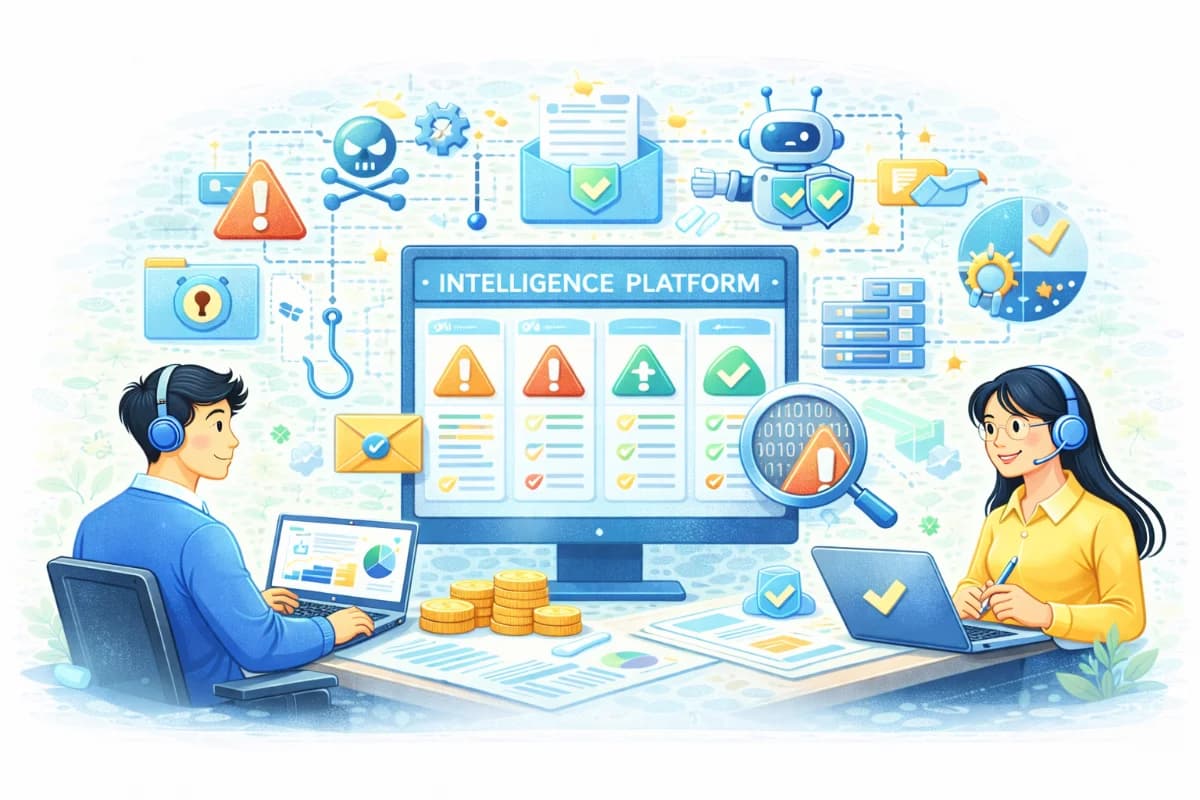
Threat intelligence platform guide for SMEs: threat intel feeds, indicators of compromise, threat hunting, intelligence automation, and TI platform features.
A threat intelligence platform is a system that helps you collect, organize, and use external and internal threat information to improve detection and response. For SMEs, the value is not more threat news, but fewer blind spots: faster identification of malicious activity, better filtering of noisy alerts, and quicker containment when known bad indicators appear. The challenge is that many SMEs buy intelligence too early, before they have clear alert ownership, consistent logging, or a workable incident response process. This overview explains what a threat intelligence platform does, when SMEs actually need one, and how threat intel feeds and indicators of compromise support day-to-day security decisions. It is practical guidance for evaluating options, not a recommendation of any single vendor.
Why this topic matters
A threat intelligence platform matters when your organization is receiving signals that could benefit from fast correlation and context, but your team lacks a clean way to turn raw intel into action. SMEs often operate with a small set of tools that generate alerts without enough explanation, which leads to slow decisions and alert fatigue. Intelligence can help by telling you whether a suspicious address, domain, or file signature is known to be malicious and by linking related activity across systems. If you have even one high-value environment, like a payment workflow, a customer database, or a production SaaS product, the ability to identify known bad activity quickly can reduce real business risk.
Imagine a 150-person B2B service firm that experiences repeated phishing attempts and occasional account takeover scares. The team sees suspicious sign-ins and unusual network connections, but it is unclear which ones are random noise and which match active campaigns. Without a structured approach, people waste hours searching the internet, copying information into spreadsheets, and making inconsistent decisions. A threat intelligence platform can centralize the intel, automatically enrich alerts with context, and create a consistent workflow for triage. The result is not perfect security, but faster and more repeatable decisions.
Key factors and features to consider
Threat intel feeds: what they are and what they are not
Threat intel feeds are streams of data about potentially malicious infrastructure and activity, such as suspicious domains, IP addresses, file hashes, and campaign patterns. They are useful for detection and for blocking known bad items, but they are not a substitute for basic security controls. SMEs should treat feeds as signals that need context, because raw feeds often include false positives or outdated entries. The real value comes when a platform filters and scores feed data based on your environment and how the indicator appears in your logs.
Indicators of compromise: practical use for SMEs
Indicators of compromise are specific clues that an attacker may be present, such as a malicious domain contacted, a known bad file signature, or a credential used from a suspicious location. In SMEs, indicators are most useful when they are integrated into detection systems so alerts can be enriched and prioritized automatically. If your team must manually look up every indicator, you will not scale and you will not reduce response time. A good threat intelligence platform helps you store, search, deduplicate, and lifecycle-manage indicators of compromise so they remain useful rather than becoming a stale list.
TI platform features that actually drive outcomes
TI platform features should be evaluated by operational outcomes, not by feature count. High-impact capabilities for SMEs include indicator enrichment, scoring and prioritization, correlation across sources, case management workflow, and integrations with logging and security tools. A platform should also support confidence levels, expiration dates, and source tracking, so your team knows whether intel is fresh and trustworthy. If a TI platform cannot connect to your alerting and response workflow, it becomes a passive database and the ROI is limited.
Intelligence automation: where automation helps and where it hurts
Intelligence automation is the ability to automatically ingest feeds, enrich alerts, and take actions such as tagging, blocking, or creating cases. For SMEs, automation should start with low-risk actions like enrichment and triage routing, then expand to blocking only when confidence is high and change control is in place. Over-automation can disrupt business if it blocks legitimate services or creates excessive noise. A phased approach – enrich first, then route, then contain – is the safest path to turn intelligence into measurable response improvement.
Threat hunting: when it becomes realistic for SMEs
Threat hunting is the proactive search for signs of compromise that were not caught by automated alerts. For many SMEs, threat hunting is only realistic after logging and basic detection are stable, because hunting without good data becomes guesswork. A threat intelligence platform can support hunting by providing hypotheses, linking indicators to campaigns, and helping analysts pivot across data sources. However, SMEs should be cautious: if you do not have time to respond to alerts reliably, hunting will not fix that gap.
Detailed comparisons or explanations
TIP versus SIEM versus SOAR: how they differ for SMEs
A threat intelligence platform focuses on intelligence data: collecting, curating, scoring, and distributing indicators and context. A log analytics system focuses on collecting logs and detecting patterns across systems, while an automation and orchestration system focuses on executing response workflows. SMEs often confuse these categories and expect one tool to do everything, which leads to disappointment. The practical approach is to ensure your logging and alert workflow is functional first, then add a threat intelligence platform when you have enough alert volume or enough investigation friction that centralized intelligence saves time and improves consistency.
A realistic example is email compromise investigations. Logs can tell you that a suspicious domain was contacted and that forwarding rules changed. A threat intelligence platform can tell you whether that domain is associated with active phishing campaigns and whether the same indicators appear in other alerts. Automation can then route the incident, capture evidence, and execute safe containment steps. When each component plays its role, SMEs get faster decisions without building a massive security operations center.
When SMEs actually need a threat intelligence platform
SMEs typically need a threat intelligence platform when at least one of the following is true: your team is spending significant time researching indicators manually, you have multiple tools that produce disconnected alerts, you need consistent decisions for blocking and response, or your business requires demonstrable intelligence handling for customers. Another trigger is when you operate in a threat-heavy environment, such as fintech, healthcare, or high-volume e-commerce, where campaigns are frequent and fast. If none of these conditions apply and your alerts are low volume, a full platform may be unnecessary; lighter intelligence processes may be enough.
The decision should also consider operational maturity. If you do not have a reliable incident response timeline, clear alert ownership, and basic logging, a platform will not magically create them. In that case, funding should go first to identity hardening, backups, and a workable incident triage process. Once those are stable, a threat intelligence platform can multiply efficiency by reducing manual research and improving prioritization. This is how SMEs avoid buying a platform that becomes shelfware.
Key feature comparison: what to ask during evaluation
SMEs evaluating TI platform features should focus on questions that reveal operational fit. Can the platform ingest your threat intel feeds and normalize them, or will you spend time cleaning data? Can it deduplicate indicators of compromise, apply expiration, and keep confidence scores so you do not block based on stale intel? Can it enrich alerts automatically and push results into your existing workflow, such as tickets or alert queues? Can you define policies for when to block, when to monitor, and when to escalate?
Also evaluate how the platform supports governance and audit readiness. SMEs often need to prove why they took an action, such as blocking a domain or quarantining a message, especially when business disruption occurs. A platform that tracks source, time, and decision context makes this easier. This is a practical part of intelligence automation: not just doing actions faster, but doing them in a way that is explainable and consistent.
Best practices and recommendations
- Confirm your foundations first: logging for critical systems, alert ownership, and an incident triage workflow
- Start small with threat intel feeds and define which feeds matter for your environment
- Use indicators of compromise for enrichment and prioritization before using them for blocking
- Choose TI platform features that reduce manual research: correlation, scoring, deduplication, and workflow integration
- Roll out intelligence automation in phases: enrich, route, then automate safe containment actions
- Review monthly: feed quality, false positives, time-to-triage, and whether intel actually changed decisions
To apply these recommendations, run a short review of your last 10 investigations and measure how much time was spent on manual indicator lookups and context gathering. If that time is significant, centralization may deliver immediate value. Then define a small set of high-impact use cases, such as phishing domain scoring or suspicious sign-in enrichment, and evaluate platforms based on how well they support those use cases. Finally, implement a monthly review to tune feeds and policies so the platform improves over time rather than becoming a static database.
- Minimum workflow outputs to expect: enriched alert context, confidence scoring, linked incidents, and a record of sources used
- Safety guardrails for automation: expiration dates, allowlists for critical services, and approval for disruptive blocking actions
- ROI measures for SMEs: reduced investigation time, improved consistency of decisions, and faster containment of known bad activity
These outputs and guardrails ensure intelligence makes operations better rather than noisier. Confidence scoring and source tracking reduce the chance of acting on unreliable data. Expiration and allowlists reduce business disruption from stale or overly broad indicators. Measuring investigation time and containment speed turns the platform from nice to have into a security ROI conversation grounded in outcomes.
FAQ
What does a threat intelligence platform actually do day to day?
Day to day, a threat intelligence platform collects threat intel feeds, normalizes them, and enriches alerts with context about whether an indicator is known to be malicious. It helps teams manage indicators of compromise by deduplicating, scoring, expiring, and linking them to incidents and campaigns. For SMEs, the daily benefit is less manual research and more consistent decisions about what to investigate first. When integrated well, it also supports faster containment by routing high-confidence cases with evidence attached.
Do SMEs need threat intel feeds if they already have security tools?
Threat intel feeds can still help, but their value depends on whether your tools can use them effectively. If indicators of compromise are not integrated into detection and response, feeds become noise and manual lookup work. SMEs should use feeds first for enrichment and prioritization, then cautiously for blocking when confidence is high. The best outcome is faster incident triage, not a larger list of suspicious items.
How do indicators of compromise support incident response?
Indicators of compromise support incident response by helping you identify whether a suspicious artifact matches known attacker infrastructure or known malicious files. They also help you scope incidents by searching whether the same indicator appears elsewhere in your environment. For SMEs, this can reduce time-to-triage because responders do not need to research from scratch. A threat intelligence platform helps manage this process so indicators stay fresh and decisions remain consistent.
When does threat hunting become worth doing for SMEs?
Threat hunting becomes worth doing when you have stable logging, a baseline of normal activity, and enough time to investigate findings. Without those, hunting becomes guesswork and can distract from basic incident response. A threat intelligence platform can support hunting by providing hypotheses and linking indicators to campaigns, but it does not replace the need for good data. SMEs should prioritize reliable triage and response first, then add hunting as a maturity step.
What are the biggest mistakes SMEs make when buying a threat intelligence platform?
A common mistake is buying a platform before foundations exist, such as reliable logging, alert ownership, and incident triage playbooks. Another mistake is ingesting too many threat intel feeds without quality controls, which increases false positives and alert fatigue. SMEs also sometimes over-automate blocking actions without guardrails, causing business disruption. The best approach is phased: enrich first, then route, then automate safe actions once confidence and governance are proven.
Conclusion
A threat intelligence platform can be valuable for SMEs when it reduces manual research, improves alert prioritization, and speeds incident triage through reliable indicators of compromise and curated threat intel feeds. The key is timing: build logging and response foundations first, then add a platform when intelligence friction is high and decisions need consistency. Choose TI platform features that integrate into your workflow and roll out intelligence automation with safety guardrails so you improve response without creating outages. If you want a practical next step, review your last investigations, quantify manual lookup time, and evaluate whether a platform would measurably reduce that effort while improving containment speed.
Related Articles

Oct 22, 2026
Real or Fake? HR Asking You to Review Payroll
Got an email from HR asking you to review payroll? Learn how to identify fake payroll emails, verify HR requests, and protect your salary and bank details.

Oct 9, 2026
I replied to a phishing email. Am I at risk?
Replied to a phishing email? Learn what risks you face, what attackers can learn from your reply, and what to do next to protect your account and business.
Oct 8, 2026
Real or Fake? How to verify a sharepoint file invitation
Received a SharePoint file invitation? Learn how to spot fake SharePoint emails, verify shared files safely, and protect your Microsoft 365 account from phishing.

Protect your business with ShieldNet 360
Get started and learn how ShieldNet 360 can support your business.