
Apr 27, 2026
BlogHow to Prevent Insider Threats with Smarter Access Controls
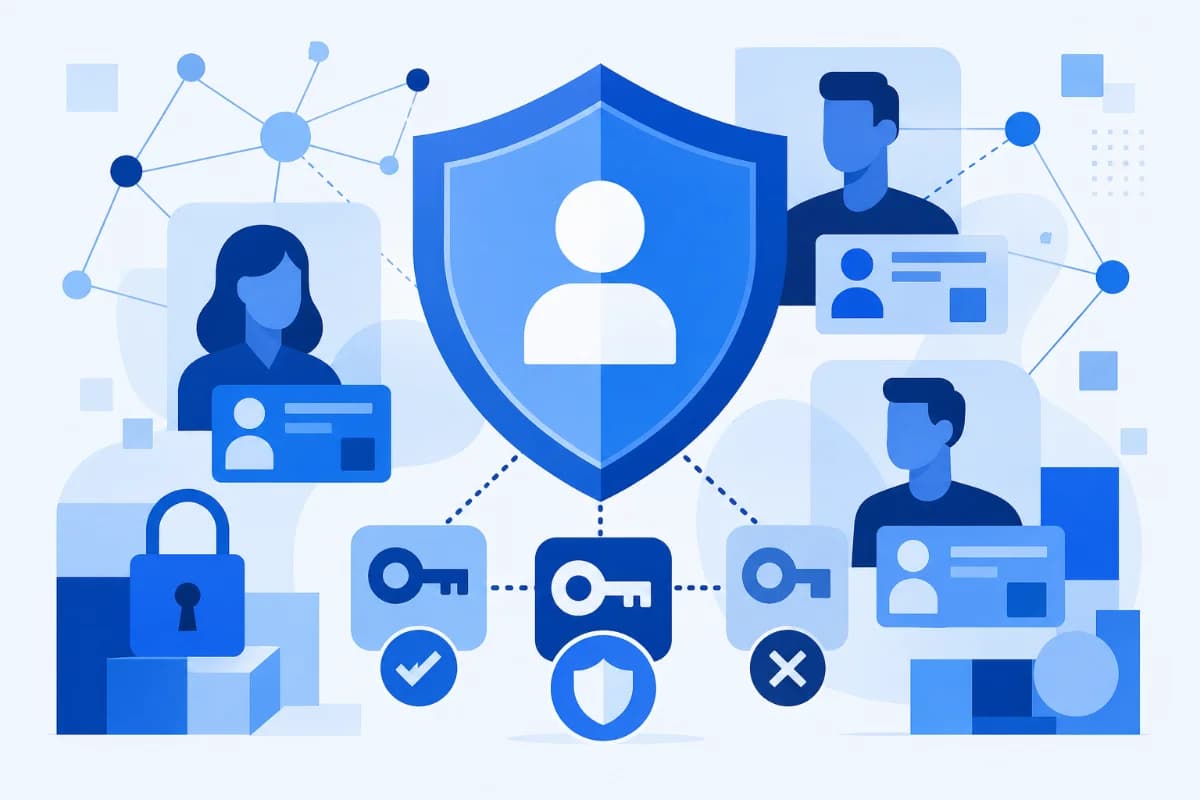
Most data breaches don't start with hackers breaking in – they start with someone who already had the keys.
To prevent insider threats, organizations must combine access governance, continuous identity verification, and least-privilege controls. That means knowing exactly who has access to what, removing dormant accounts immediately, monitoring active sessions, and enforcing identity-based policies across every system – so that visibility, not perimeter walls, becomes your strongest line of defense.
Insider incidents now drive a significant share of all data breaches, and the common thread across them is poor access control. This guide breaks down the access risks behind insider breaches and the practical controls SMEs can put in place to prevent them – without needing an enterprise security team.
What Is an Insider Threat?
An insider threat is a security risk that originates from someone with authorized access to your systems – an employee, contractor, partner, or vendor. According to the Cybersecurity and Infrastructure Security Agency (CISA), insider threats fall into three broad categories:
- Malicious insiders – individuals who intentionally misuse access to steal data, sabotage systems, or sell credentials.
- Negligent insiders – well-meaning employees who fall for phishing, misconfigure permissions, or break policy for convenience.
- Compromised insiders – legitimate users whose credentials have been stolen by an external attacker through phishing or malware.
The financial stakes are significant. The 2025 Ponemon Cost of Insider Risks Report found that insider incidents now cost organizations an average of $17.4 million annually and take 81 days on average to contain. The Verizon 2025 Data Breach Investigations Report shows that stolen credentials were used in roughly 22% of all breaches – meaning attackers are increasingly logging in rather than breaking in.
For SMEs, the impact is sharper. Smaller teams mean fewer eyes on access logs, weaker offboarding discipline, and broader trust assumptions baked into daily workflows.
Why Most Insider Threats Trace Back to Access
When you investigate an insider incident, the same access failures show up again and again:
- Over-permissioned accounts – users have access to systems they don't actually need for their role.
- Dormant or orphaned accounts – former employees and ex-contractors still have working logins weeks after leaving.
- Shared credentials – admin or service accounts used by multiple people, with no way to trace who did what.
- Standing privileges – high-trust accounts that stay "always on" instead of being granted just-in-time.
- Weak session visibility – no way to see who is logged in to what right now.
- Third-party access sprawl – vendors and contractors with broad VPN access and no automatic revocation.
Each of these creates an attack surface that doesn't require any sophisticated exploitation. As noted by CrowdStrike, traditional security tools focus on external threats and aren't designed to detect suspicious behavior from approved users – leaving access misuse as a quiet, persistent gap.
How to Prevent Insider Threats: 7 Access-Centric Controls
Most prevention guides reach for behavioral analytics and DLP tools first. But for SMEs, the highest-leverage controls live closer to the access layer. Here are seven that reliably reduce insider risk:
1. Map every identity and access path
You cannot protect what you can't see. Build a single inventory of every human and machine identity, what they can access, and how. This includes SaaS apps, cloud admin panels, source code repositories, and shared drives. Visibility is the precondition for every other control.
2. Apply least privilege by default
The NIST SP 800-207 Zero Trust Architecture treats least privilege as foundational: grant the minimum access required to do a job, and nothing more. New hires should start with a tightly scoped role and earn additional privileges only when justified.
3. Enforce continuous identity verification
A one-time login is not enough. Identity should be re-checked on every sensitive action – not just at session start. This is the core of modern Zero Trust Network Access (ZTNA), where trust is never assumed and always verified.
4. Automate onboarding and offboarding
The single biggest source of dormant access is manual offboarding. When a developer leaves, their accounts often persist because nobody has a complete list. Identity-driven access automation removes this risk by tying every login to a central identity that can be deactivated in one place.
5. Monitor active sessions in real time
You should be able to answer the question "who is logged in to my admin dashboard right now?" in seconds. Real-time session visibility lets compliance officers spot abnormal access – at strange hours, from new devices, or from unfamiliar geographies – before it becomes a breach.
6. Replace legacy VPNs with identity-based access
A VPN gives broad network access once a user authenticates. That's the opposite of least privilege. Identity-based access verifies the user, the device, and the request for every connection, allowing only specific resources rather than the whole network.
7. Maintain audit-ready access logs
For frameworks like ISO 27001, SOC 2, GDPR, and PCI DSS, you need to prove who accessed what and when. Centralized, exportable access logs turn compliance from a fire drill into a routine query.
Comparison: Traditional VPN vs Identity-Based Access
Most insider risk reduction comes from changing how access works, not adding more monitoring on top.
Capability | Traditional VPN / Perimeter Access | Identity-Based Access (ZTNA) |
|---|---|---|
Trust model | Trust once, after login | Verify continuously, every connection |
Access scope | Broad network access | Per-app, per-resource |
Session visibility | Limited, often retroactive | Real-time, centralized |
Offboarding | Manual and slow | Instant, identity-driven |
Audit logs | Fragmented across systems | Unified and audit-ready |
Deployment | On-premises appliances | Cloud-based, no installation |
The shift from VPN to identity-based access is one of the most practical insider-threat prevention upgrades a growing SME can make.
What Should Compliance Officers Prioritize First?
For compliance and risk officers running lean teams, focus order matters. A pragmatic 90-day priority list:
- Run an access review. Pull a list of every active account and tag dormant ones for removal.
- Standardize offboarding. Make access revocation a same-day, identity-driven process – not a ticket queue.
- Enforce MFA everywhere. Especially for admin accounts, source code, and finance systems.
- Replace shared accounts. Move to per-user identities with role-based access.
- Centralize access logs. A single place to answer auditor questions ends the audit scramble.
These steps don't require a security operations center. They require a single source of truth for identity and access.
ShieldNet Access: Prevent Insider Threats Without Adding Complexity
ShieldNet Access is designed for growing SMEs that need control without complexity. It replaces traditional VPNs with identity-based access that verifies every connection, every time.
Key capabilities relevant to insider threat prevention:
- Continuous verification – every user and device is checked on every connection, not just at login.
- Automatic isolation of risky endpoints – unauthorized or unusual connections are blocked before they reach internal resources.
- Identity integration – seamless integration with Microsoft 365 and Google Workspace, so identity changes propagate immediately.
- Cloud-based deployment – no agents, no appliances, no infrastructure changes.
- Audit-ready access logs – full visibility into who accessed what and when, ready for ISO 27001, SOC 2, GDPR, or PCI DSS reviews.
The result: SMEs get enterprise-grade visibility and control over access without hiring a dedicated security team.
FAQ
What is the most common cause of insider threats?
Negligence, not malice. The 2025 Ponemon Cost of Insider Risks Report found that around 55% of insider incidents are caused by careless or negligent employees – falling for phishing, misconfiguring permissions, or breaking policy for convenience.
How do you detect an insider threat early?
Watch for unusual access patterns: logins at unusual hours, large data transfers, access to systems outside an employee's role, or activity from new devices. Centralized session visibility and identity logs make these signals visible in real time.
What is the difference between insider threats and external attacks?
External attackers must first break in, often through phishing or unpatched vulnerabilities. Insiders already have legitimate access. That's why insider incidents are harder to detect and take an average of 81 days to contain, according to Ponemon Institute research.
Can small businesses prevent insider threats without a dedicated security team?
Yes. The biggest gains for SMEs come from access discipline, not advanced tooling: least privilege, automated offboarding, MFA, and identity-based access. A modern ZTNA solution delivers these without enterprise-scale infrastructure or staffing.
Take Control of Insider Risk
Insider threats are not solved by a bigger firewall – they're solved by knowing exactly who can access what, and revoking that access the moment it stops being needed.
Start a free trial of ShieldNet Access to see how identity-based access prevents insider breaches before they happen.
Related Articles

Oct 22, 2026
Real or Fake? HR Asking You to Review Payroll
Got an email from HR asking you to review payroll? Learn how to identify fake payroll emails, verify HR requests, and protect your salary and bank details.

Oct 9, 2026
I replied to a phishing email. Am I at risk?
Replied to a phishing email? Learn what risks you face, what attackers can learn from your reply, and what to do next to protect your account and business.
Oct 8, 2026
Real or Fake? How to verify a sharepoint file invitation
Received a SharePoint file invitation? Learn how to spot fake SharePoint emails, verify shared files safely, and protect your Microsoft 365 account from phishing.

Protect your business with ShieldNet 360
Get started and learn how ShieldNet 360 can support your business.