
Mar 16, 2026
BlogSecurity due diligence explained for SME growth 2026
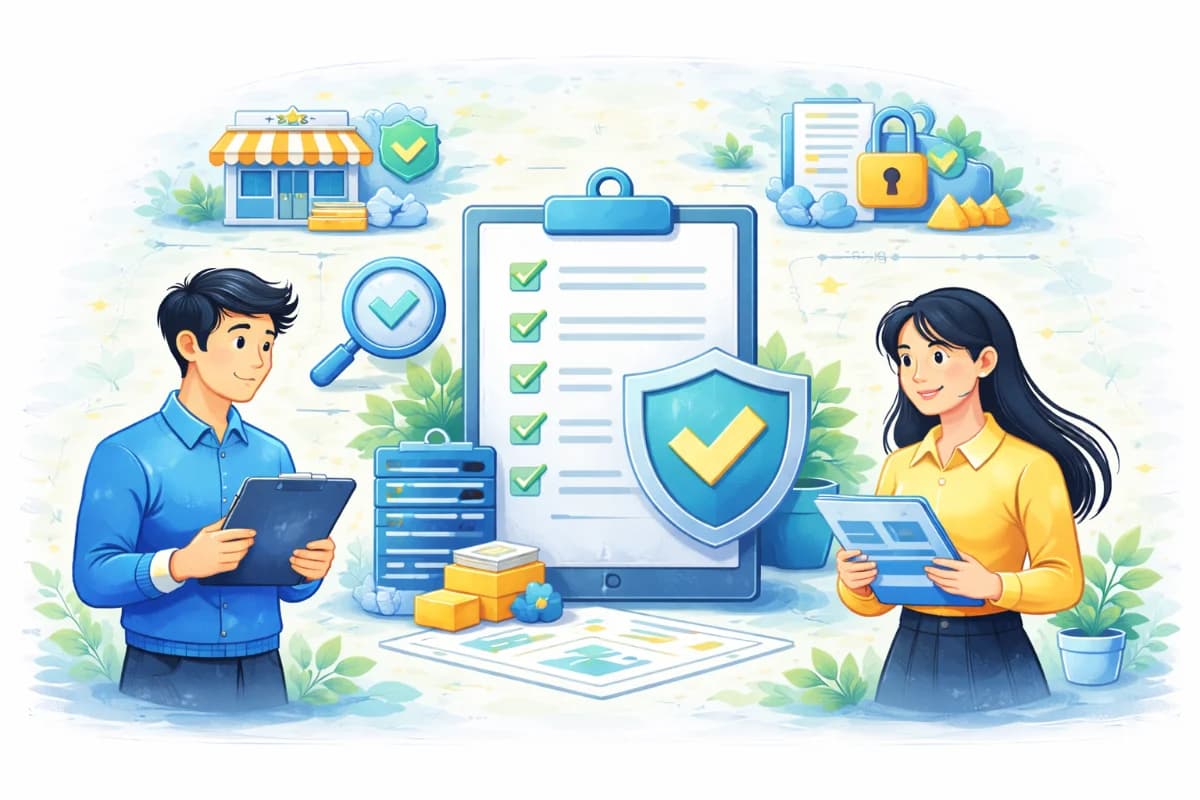
Security due diligence for SMEs: vendor security assessment, third-party risk, cybersecurity due diligence checklist, and security questionnaires for customer reviews.
Security due diligence is the process of checking whether an organization’s security practices are good enough for the risk you are about to take on. For SMEs, it shows up in two common moments: evaluating vendors who will touch your systems or data, and responding to customer security reviews before a deal can close. The goal is not perfection; it is clarity what data is involved, what controls exist, what evidence can be shown, and what gaps must be fixed or contractually managed. This guide explains security due diligence in plain language, outlines what to look for in a vendor security assessment and provides a practical cybersecurity due diligence checklist you can use to answer security questionnaires efficiently and consistently.
Why this topic matters
Security due diligence matters because SMEs often inherit risk through relationships. A single vendor with broad access can expose sensitive data, disrupt operations, or create compliance problems, even if your internal security is solid. On the sales side, customer security reviews can delay or kill deals if you cannot provide consistent, credible answers and evidence. In both directions, the cost of uncertainty is high: stalled revenue, rushed remediation, and avoidable exposure.
Imagine a 70-person SaaS vendor selling to a large enterprise. Procurement sends security questionnaires asking about access control, backups, incident response, and vendor compliance. The SME has reasonable practices, but evidence is scattered, and answers vary by who responds. The deal slows because the customer cannot trust the consistency. At the same time, the SME is onboarding a new support vendor with admin access, but does not perform a vendor's security assessment, so permissions are over broad and offboarding is informal. Security due diligence reduces both problems by standardizing what you ask, what you answer, and what proof you keep.
Key factors and features to consider
Vendor security assessment: scope, access, and data flows first
A vendor's security assessment starts with scope: what the vendor will access, what data they will process, and what systems they can change. SMEs should map data flows and identify the highest risk of access types, such as administrative access, access to customer data, or access to payment workflows. The most common failure is treating all vendors the same, which wastes time on low-risk tools and under scrutinizing high-risk vendors. A risk tier approach keeps security due diligence practical and cost effective.
Third-party risk: focus on what can fail and how you recover
Third -party risk is not just “will the vendor get hacked,” but also “what happens if the vendor goes down, changes behavior, or loses data.” SMEs should ask about resilience: backups, disaster recovery, access revocation, and breach of notification responsibilities. If a vendor is critical to operations, you also need an exit plan: how you can retrieve data and switch providers without business interruption. This is where security due diligence connects to business continuity, not just technical controls.
Cybersecurity due diligence checklist: make it evidence driven
A cybersecurity due diligence checklist should be built around evidence you can verify, not marketing statements. For example, instead of “do you have access control,” ask “how do you enforce strong login verification and how often do you review privileged access?” Instead of “do you have backups,” ask “how often do you test restores and what is your recovery target?” Evidence-driven questions reduce ambiguity and make security questionnaires easier to answer consistently. They also reduce the chance of discovering gaps only after an incident.
Security questionnaires: answer once, reuse often
Security questionnaires are repetitive by nature. SMEs should treat them as a knowledge management problem: create a standard answer library and a monthly evidence pack so you can respond quickly. This improves sales velocity and reduces engineering disruption. A strong security due diligence approach turns questionnaires from a one off scramble into a repeatable process, which is a business growth advantage.
M&A cyber diligence: a special case of due diligence
M&A cyber diligence is security due diligence performed during acquisitions or major investments. For SMEs, the principle is the same map data, systems, and risks, but the stakes are higher because hidden incidents, weak controls, or unknown exposures can become deal breakers or valuation issues. Even if you are not doing M&A today, the same checklist discipline helps because it reveals what you would need to prove in a high stakes review. Keeping your program “diligence ready” is a form of insurance for growth.
Detailed comparisons or explanations
Customer security review vs vendor assessment: same structure, different direction
When customers review you, they want confidence that you will not create risk for them. When you review vendors, you want confidence that the vendor will not create risk for you. The structure is similar: define scope, review controls, verify evidence, and define contractual responsibilities. The difference is leverage: customers may impose requirements you must meet, while you may have limited leverage with large vendors. SMEs should use this reality to decide where to negotiate, where to add compensating controls, and where to choose a different vendor.
A practical example is access. For a vendor handling customer support, you might require strong login verification, least privilege, and audit logs, plus a commitment to notify you quickly if a breach occurs. For a customer review, you might show your own access to review cadence and provide evidence that offboarding is rapid. In both cases, the goal is to reduce uncertainty and align expectations in writing. Security due diligence is the language of that alignment.
Risk tiering vendors so SMEs do not drown in paperwork
SMEs should tier vendors into low, medium, and high-risk based on data sensitivity and access level. Low risk vendors might include marketing tools with minimal data, while high-risk vendors include those with admin access or customer personal data. High-risk vendors require deeper third-party risk review, including incident response commitments and evidence of security controls. This tiering is how you keep cybersecurity due diligence checklist effort proportional to risk, which is essential for small teams.
A realistic approach is to apply a short checklist to all vendors and a deeper checklist only to high-risk vendors. For high-risk vendors, they require evidence such as audit reports, security program summaries, or documented control practices. For low risk vendors, focus on access to minimization, data minimization, and clear contract terms. This keeps vendor security assessment manageable while still protecting the business.
Evidence management: the hidden accelerator of due diligence
SMEs often lose time due to diligence because they cannot find proof quickly. Evidence management means storing time stamped artifacts in a consistent place: access review records, backup restore test results, incident response exercise notes, and vendor review notes. When you have a monthly evidence pack, you can answer security questionnaires quickly and consistently. This is a business growth advantage because it reduces deal friction and reduces the burden on technical teams.
Evidence management also protects you in disputes. If a vendor's incident affects your data, your records show what was agreed, what controls were required, and what reviews occurred. If a customer challenges your posture, your evidence demonstrates discipline. This is why security due diligence is not just a sales step; it is a risk management step.
Best practices and recommendations
- Tier vendors by risk and apply deeper vendor security assessment only where access and data sensitivity justify it
- Build a cybersecurity due diligence checklist that is evidence driven and mapped to common security questionnaires
- Create a standard answer library and update it quarterly so you stop rewriting responses
- Maintain a monthly evidence pack: access reviews, restore tests, incident exercises, and vendor review notes
- Define contract essentials: breach notification timelines, access scope, subcontractor rules, and exit/data return terms
- Rehearse customer security reviews by running an internal mock questionnaire once per quarter
To implement this, start by collecting the last three security questionnaires you received and the last three vendor onboarding requests you processed. Identify overlapping questions and build a core answer set with evidence of links and owners. Then create two checklists: a short one for low-risk vendors and a deeper one for high-risk vendors. Finally, store artifacts in a consistent structure, so the next customer review becomes a retrieval task, not a reconstruction task. Over time, this reduces third-party risk while improving sales velocity.
Cybersecurity due diligence checklist for SMEs
- Scope and data: what data is shared, where it is stored, who can access it, and how access is revoked
- Identity and access: strong login verification, least privilege, privileged access review cadence, and offboarding process
- Security baseline: patching expectations, secure configuration, endpoint hygiene, and logging for critical systems
- Incident response: detection capability, escalation contacts, breach notification process, and evidence retention
- Backups and recovery: backup coverage, restore testing frequency, recovery targets, and ransomware readiness
- Vendor compliance: subcontractor controls, data processing terms, audit evidence availability, and privacy obligations
- Business continuity: uptime expectations, disaster recovery approach, and exit plan for data portability
- Evidence management: proof of controls, last review dates, and a record of exceptions and remediation plans
- Security questionnaires: standardized answers, owner review, and change log when policies evolve
Use this checklist as a practical tool, not as a compliance performance. For each category, require one or two concrete artifacts that prove the claim, such as a restore test record or a privileged access review note. If a vendor cannot provide certain evidence, document the gap and decide whether to accept the risk, add compensating controls, or choose another provider. For customer reviews, use the same structure to answer consistently and attach evidence from your monthly pack. This is how security due diligence becomes predictable and scalable.
FAQ
What is security due diligence in simple terms?
Security due diligence is checking whether security is good enough for the risk of a relationship, such as using a vendor or selling to a large customer. It means understanding what data and access are involved, verifying key controls, and documenting evidence and responsibilities. For SMEs, it is a repeatable way to avoid surprises and reduce deal friction. The goal is clarity and risk management, not perfection.
How deep should a vendor security assessment be for SMEs?
Depth should match risk. If a vendor has access to customer personal data or administrative access, you need a deeper third-party risk review, including incident response commitments and evidence of controls. If a vendor has minimal data and no sensitive access, keep the assessment short and focus on access minimization and contract basics. Risk tiering is how SMEs keep due diligence cost effective.
How do we respond to security questionnaires faster?
Create a standard answer library and a monthly evidence pack so you can reuse answers and attach proof quickly. Standardize your language and keep it aligned with enterprise expectations, such as access reviews, backup restore testing, and incident response readiness. Update the library quarterly so it reflects current reality. This turns customer security reviews into a process, not a scramble.
What contracts terms matter most for third-party risk?
Key terms include breach of notification timelines, access scope limitations, subcontractor controls, data return and deletion obligations, and audit or evidence support commitments. SMEs should also ensure there is a clear escalation of contact and defined responsibilities during incidents. These terms reduce ambiguity when something goes wrong and help you enforce expectations. Contract clarity is a major output of security due to diligence.
How does M&A cyber diligence differ from routine due diligence?
M&A cyber diligence is deeper and higher stakes because hidden incidents, poor controls, or unknown exposures can affect valuation and integration risk. It typically requires broader discovery across systems, historical incidents, and security governance. The good news for SMEs is that building routine diligence habits evidence management, vendor reviews, and consistent controls makes M&A cyber diligence much easier if it ever becomes relevant. Routine discipline is the best preparation.
Conclusion
Security due diligence helps SMEs grow by reducing third-party risk and by accelerating customer security reviews through consistent answers and evidence. A practical approach is to tier vendors, run an evidence driven vendor security assessment, maintain a monthly evidence pack, and standardize security questionnaires responses. When you treat due diligence as an operating habit rather than a one-off task, deals move faster and surprises decrease. If you want a next step, build two checklists lightweight for low-risk vendors and deeper for high-risk vendors and start a monthly evidence pack so you can respond to security reviews confidently and quickly.
Related Articles

Sep 10, 2026
Can a phishing email come from a real email address?
Yes, phishing emails can come from real email accounts. Learn how attackers hijack trusted accounts, what warning signs to check, and how to verify emails safely.
Sep 9, 2026
How to verify a suspicious email without clicking anything
Learn how to verify a suspicious email safely without clicking links, opening attachments, scanning QR codes, or replying to the sender.

Sep 7, 2026
What is CEO fraud? How fake executive emails work
Learn how CEO fraud works, how attackers impersonate executives by email, the warning signs to watch for, and how employees can verify suspicious requests.

Protect your business with ShieldNet 360
Get started and learn how ShieldNet 360 can support your business.