
Mar 12, 2026
BlogContinuous risk management for SMEs: a monthly system
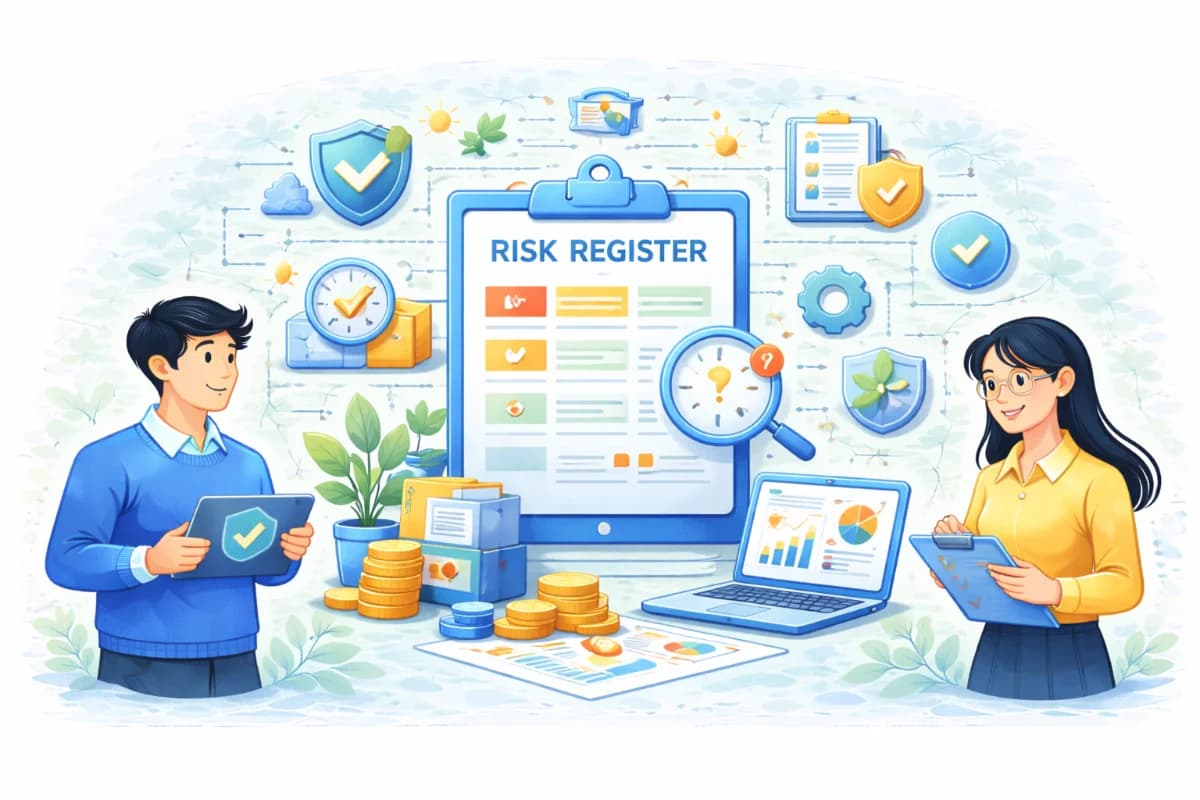
Continuous risk management for SMEs: build a risk register, risk assessment and treatment plan, control selection, and continuous risk monitoring monthly.
Updated: February 2026. Continuous risk management is the habit of keeping security risk decisions current as your business changes. For SMEs, it is not a formal bureaucracy; it is a lightweight operating system that helps you decide what to fix first, what to accept, and what to monitor. Most security programs fail in small teams because risk assessment happens once, then reality changes new vendors, new apps, new employees and the risk register becomes stale. This guide explains continuous security risk management in plain language, shows how to build a practical risk register, and provides a monthly review rhythm so you can prioritize controls and maintain audit readiness without heavy overhead.
Why this topic matters
Continuous risk management matters because SMEs change faster than their policies. New SaaS tools appear overnight, teams add contractors, and sensitive data gets copied into new places without formal approval. Attackers and failures exploit drift: the gap between how you think the business works and how it actually works today. A monthly risk review closes that gap by forcing small, regular decisions rather than one big annual risk workshop that gets forgotten.
A realistic example is a 90 person company that adopts a new customer support platform to move faster. Within weeks, support agents start uploading customer documents that include personal data, while the vendor integration is configured quickly and permissions are broad. If there is no continuous risk monitoring, the company does not notice that data access expanded and that offboarding for contractors is inconsistent. With a simple risk register and monthly review, the company captures the new risk, assigns an owner, selects controls like permission tightening and data retention rules, and tracks completion. This is how continuous risk management reduces real risk without slowing growth.
Key factors and features to consider
Risk assessment: define risk in business terms
Risk assessment should translate security concerns into business outcomes: downtime, financial loss, customer trust damage, and contract risk. SMEs should avoid writing risks as vulnerability exists and instead write them as if X happens, Y business impact occurs. This makes prioritization easier because leadership can compare risks across departments. When risk statements are clear, control selection becomes practical rather than abstract.
Risk register: the minimum fields that make it usable
A risk register is a living list of risks with enough structure to be actionable. For SMEs, the minimum fields are: risk title, scenario description, affected systems, likelihood (1 5), impact (1 5), risk owner, current controls, planned controls, target date, and status. You do not need a complex tool; a shared document works if ownership and cadence are real. The risk register becomes valuable when it is updated monthly, not when it is perfect.
Risk treatment plan: accept, reduce, transfer, or avoid
A risk treatment plan is the decision about what you will do with each risk. The four common actions are: accept the risk, reduce it with controls, transfer it through contracts or insurance, or avoid it by changing the business process. SMEs often default to reduce everything, which creates an impossible backlog and wasted spending. A realistic risk treatment plan selects a small number of high impact risks to reduce now and explicitly accepts or monitors lower impact risks until resources allow.
Control selection: pick controls that match the scenario
Control selection should be scenario driven: choose controls that directly reduce likelihood or impact for that specific risk. For example, if the risk is finance email compromise, controls include strong login verification, mailbox rule monitoring, and payment change verification procedures. If the risk is ransomware downtime, controls include tested backups, least privilege, and endpoint isolation capability. This approach keeps controls cost effective because you buy and operate only what reduces the risks you actually face.
Continuous risk monitoring: monthly review without heavy overhead
Continuous risk monitoring is the monthly habit of checking whether the risk landscape changed and whether planned controls were completed. SMEs should keep the review to 30 60 minutes with a fixed agenda: review top risks, review changes in systems or vendors, review incidents and near misses, and update statuses. The goal is to keep the risk register current and to prevent drift, not to produce long reports. When done consistently, monthly reviews improve audit readiness because you can show active risk governance.
Detailed comparisons or explanations
One time risk assessment vs continuous risk management
A one time risk assessment is a snapshot; continuous risk management is a process. SMEs often run a risk workshop during a compliance push, then do not revisit it until the next audit, by which time the business has changed. Continuous risk management prevents that by treating risk as a monthly operational topic, like cash flow or customer churn. This makes security risk management more accurate and more trusted, because it reflects what is actually happening.
A practical difference is how you handle new vendors. In a one time approach, a new vendor integration may never enter the risk register, so permissions and data flows remain unreviewed. In a continuous approach, new vendor added is a monthly agenda item, and the risk register captures the change with an owner and a short risk treatment plan. This prevents silent exposure and reduces the chance of painful discoveries during customer audits. It also keeps control selection aligned to real business changes.
How to prioritize risks without complex math
SMEs can prioritize risks using a simple scoring model: likelihood (1 5) times impact (1 5), then adjust for exposure and readiness. You can also add a control effort indicator to avoid choosing a huge project when a smaller fix delivers most benefit. The point is consistency, not precision, because risk numbers are estimates. When you use the same method each month, trends become visible and decisions become easier.
A helpful tactic is to define top 5 risks that must be reviewed every month, while lower risks are reviewed quarterly. This keeps overhead low and ensures your attention goes to the biggest business threats. If a new incident happens, you temporarily promote related risks into the top five until controls are implemented. This is continuous risk monitoring in practice: attention moves based on reality, not on a static plan.
Risk register to control funding: connecting to budget decisions
A risk register is most valuable when it drives budget and action. If your risk register says ransomware downtime is high, but your risk treatment plan does not include tested backups, then the register is theater. SMEs should map each top risk to one to three controls, estimate effort and cost, and then schedule those controls across a quarter. This makes continuous risk management a decision engine, not a document.
For example, you might decide that reducing finance fraud risk requires funding strong login verification and training for the finance team, while reducing data exposure risk requires tightening sharing settings and running monthly public link reviews. These controls are often cheaper than new tools and deliver measurable impact. When leadership sees risk decisions translated into a small control plan with dates and owners, security risk management becomes easier to fund and easier to defend.
Best practices and recommendations
- Start with a simple risk register template and keep fields minimal
- Define risks as business scenarios, not technical findings
- Assign a single risk owner per risk and require monthly status updates
- Use a lightweight risk assessment score and review the top five risks monthly
- Build a risk treatment plan that includes acceptance and monitoring, not only mitigation
- Translate top risks into a short control selection plan with deadlines and evidence artifacts
To implement this without heavy overhead, schedule a recurring monthly 45 minute meeting with the same agenda and a single facilitator. Before the meeting, each owner updates their risks in the risk register, so the meeting is about decisions, not status discovery. After the meeting, capture two outputs: updated scores and a short list of actions due before the next review. Over time, this discipline becomes continuous risk monitoring and supports audit readiness because you can show a consistent governance trail.
- Monthly cadence agenda: top risks, new systems/vendors, incidents/near misses, overdue controls, and next month actions
- Evidence artifacts: updated risk register, decision notes, and completion proof for key controls
- Quarterly add ons: tabletop incident drill summary and vendor review summaries
These elements keep the process defensible while staying lean. The risk register is the single source of truth, decision notes show accountability, and control completion proof shows that risk treatment plans are real. Quarterly add ons keep the program credible for audits without turning every month into a compliance sprint. This is the practical balance SMEs need.
FAQ
What is continuous risk management in simple terms?
Continuous risk management is a monthly habit of keeping your security risk list current and acting on the most important items. It means you maintain a risk register, assign owners, choose a risk treatment plan, and track control completion as the business changes. For SMEs, it replaces annual big workshops with small, regular decisions. The result is fewer surprises and more predictable spending.
How do we build a risk register without a dedicated security team?
Start with a simple template and limit the number of risks at first. Ask IT, finance, and operations to each contribute one or two business impact risks, then assign a single owner for each risk. Keep the register in a shared place and review it monthly using a fixed agenda. SMEs succeed when the risk register is owned by the business, not only by security, because many controls are operational.
What should be in a risk treatment plan for SMEs?
A risk treatment plan should state whether you will accept, reduce, transfer, or avoid the risk, and it should include specific actions, owners, and target dates. SMEs should avoid trying to reduce every risk immediately; instead, reduce the top risks and accept or monitor lower risks until resources allow. Include evidence expectations, such as monthly access review note or restore test record, so completion is measurable. This makes risk treatment plans real and audit friendly.
How do we review risks monthly without heavy overhead?
Keep the monthly review to 30 60 minutes and focus on the top five risks plus any major changes. Use a fixed agenda: top risk status, new vendors or systems, incidents and near misses, and decisions for next actions. Require owners to update the risk register before the meeting so the meeting is not spent collecting information. This is continuous risk monitoring designed for lean teams.
How do we prioritize controls from the risk register?
For each top risk, select one to three controls that directly reduce likelihood or impact, then schedule them across a quarter with owners and due dates. Prefer controls with high leverage and low operating cost, such as strong login verification, least privilege, backup restore testing, and sharing controls. Measure completion with simple artifacts so you can prove progress. This is how security risk management becomes a budgeting and execution tool.
Conclusion
Continuous risk management for SMEs is a lean operating system: a living risk register, a realistic risk treatment plan, and continuous risk monitoring through a monthly cadence. When risks are written in business terms and tied to control selection with owners and evidence, you reduce drift and stay audit ready without heavy overhead. The best next step is to build a simple risk register, pick your top five risks, and run a monthly 45 minute review that produces concrete actions. Over time, this turns security risk management into predictable decisions rather than reactive firefighting.
Related Articles

Oct 22, 2026
Real or Fake? HR Asking You to Review Payroll
Got an email from HR asking you to review payroll? Learn how to identify fake payroll emails, verify HR requests, and protect your salary and bank details.

Oct 9, 2026
I replied to a phishing email. Am I at risk?
Replied to a phishing email? Learn what risks you face, what attackers can learn from your reply, and what to do next to protect your account and business.

Oct 8, 2026
Real or Fake? How to verify a sharepoint file invitation
Received a SharePoint file invitation? Learn how to spot fake SharePoint emails, verify shared files safely, and protect your Microsoft 365 account from phishing.

Protect your business with ShieldNet 360
Get started and learn how ShieldNet 360 can support your business.