
Mar 18, 2026
BlogWhat is a data protection officer? SME GDPR guide in 2026
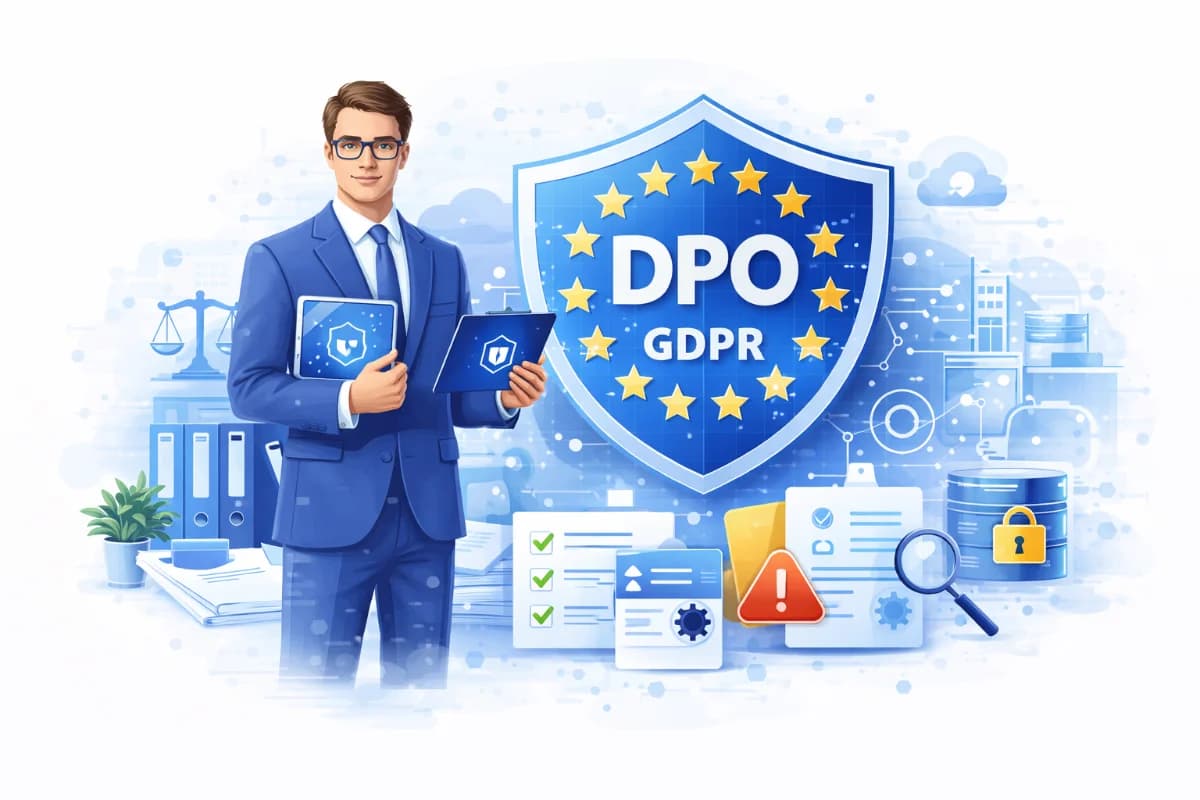
Data protection officer guide for SMEs in 2026: DPO responsibilities, appointing a DPO, privacy program, data governance, and GDPR DPO role explained clearly.
Updated: February 2026. A data protection officer is the person who helps an SME handle personal data responsibly and prove it can be trusted. In practice, a data protection officer turns privacy from “a policy on paper” into daily decisions: what data you collect, why you need it, how long you keep it, and how you reduce risk. The GDPR DPO role is often confused with “the person who owns compliance,” but the role is designed to advise, monitor, and coordinate across teams so privacy doesn’t collapse during incidents or customer reviews. This article explains what a data protection officer does, when one is required, and how SMEs can scale the role without hiring a large compliance department.
Why this topic matters
For SMEs, privacy work often gets spread across legal, IT, product, and operations, which sounds reasonable until something goes wrong. When a customer sends security questionnaires, when an individual asks about their data, or when a breach happens, teams need a single, consistent answer about data handling and accountability. A data protection officer creates that coordination point, which reduces confusion and speeds decisions. Without that function, SMEs tend to react late, document inconsistently, and lose time rebuilding “what happened” from scattered messages and spreadsheets.
A realistic scenario is an SME expanding into a new market and adding analytics, customer support tooling, or identity checks. Each new system changes data governance: new vendors, new access permissions, and new retention behavior that can quietly increase risk. If nobody owns the privacy program end-to-end, the organization may collect more data than needed and struggle to answer basic questions like where personal data lives and who can access it. A well-run data protection officer function keeps processing decisions traceable, aligns teams on standards, and makes customer trust easier to earn.
Key factors and features to consider
GDPR DPO role: independence and practical oversight
The GDPR DPO role is designed to advise and monitor, not to personally execute every privacy task. A data protection officer should be independent enough to raise concerns and recommend changes even when business pressure is high. For SMEs, that independence often means a clear reporting line to leadership and a written charter that defines scope. When the role is treated as oversight, the organization can scale privacy decisions across teams instead of turning the DPO into a bottleneck.
DPO responsibilities that SMEs should expect
DPO responsibilities include advising on compliance obligations, monitoring adherence to policies, training teams, and guiding risk decisions for new processing activities. In day-to-day work, a data protection officer also helps ensure documentation exists for key decisions, such as retention periods, lawful basis choices, and vendor processing terms. In incident situations, the DPO responsibilities often expand into coordinating breach documentation and supporting notification decisions. SMEs benefit when these responsibilities are defined in operational terms that non-lawyers can follow.
Data governance as the foundation of the role
Data governance is the set of practical rules that keep personal data understandable and controllable inside the business. For a data protection officer, data governance includes maintaining a data inventory, mapping purposes of processing, defining retention periods, and tracking vendors who handle personal data. SMEs often struggle here because systems grow quickly and ownership is unclear, which makes privacy work slow and reactive. When data governance basics are in place, the DPO can focus on risk reduction and program improvement instead of firefighting.
Appointing a DPO: internal, external, or hybrid models
Appointing a DPO can be done internally, externally, or through a hybrid model where an internal privacy lead works with an external specialist. An internal data protection officer can move faster because they know the business and systems, but must have sufficient expertise and independence. An external DPO can be cost-effective and experienced, but needs strong access to decision-makers and to real operational information. Many SMEs succeed with a hybrid approach because it balances day-to-day coordination with senior oversight for higher-risk decisions.
Privacy program design that scales in lean teams
A privacy program is not a binder; it is a set of routines, owners, and evidence that holds up under pressure. SMEs should aim for a simple operating cadence: monthly reviews of high-risk changes, quarterly refresh of the data inventory and vendors, and annual policy updates aligned to the business. The data protection officer sets the standards, provides templates, and checks that the program is working. When the privacy program is designed around routine work, the DPO role scales without slowing product delivery.
Detailed comparisons or explanations
When is a data protection officer required for SMEs?
Whether a data protection officer is required depends on the nature of processing, not on company size. In simplified terms, SMEs are more likely to need appointing a DPO when their core activities involve regular and systematic monitoring of individuals at large scale, or large-scale processing of sensitive categories of data. Even when not strictly required, SMEs often appoint a DPO-like role because enterprise customers expect clear ownership and a GDPR DPO role contact point. The practical goal is to reduce ambiguity and demonstrate disciplined data governance, especially in regulated or procurement-heavy industries.
SMEs should avoid making a binary, one-time decision and then forgetting it. Processing changes over time, especially when you add new marketing tracking, support tooling, or identity verification, and those changes can shift whether appointing a DPO becomes advisable. A good approach is to document your reasoning annually and whenever your data profile changes materially. This creates a defensible trail that supports your privacy program even if you later adopt a more formal DPO structure.
Data protection officer vs privacy lead vs security lead
A data protection officer focuses on privacy compliance, individual rights, and lawful processing, while a security lead focuses on protecting systems and preventing incidents. There is overlap, but they are not interchangeable roles, and SMEs can create risk if one person both decides data processing purposes and also “monitors” compliance without independence. A privacy lead can run day-to-day program operations, but may not meet expectations for the GDPR DPO role in certain contexts. The safest SME pattern is to separate decision-making from oversight and to define escalation paths for higher-risk processing.
In practical terms, the DPO should not be the person pushing a new data-collection feature and then signing off their own decision as “compliant.” Instead, the DPO should review the decision record, challenge assumptions, and ensure controls and evidence exist. The security lead should support with technical controls like access restriction, logging, and incident response readiness. When roles are clearly separated, SMEs gain speed because each team knows what they own and what the DPO will review.
How a DPO role reduces cost in customer reviews and incidents
SMEs often feel that privacy roles are “overhead,” but the business value shows up in friction reduction. Security questionnaires and privacy questionnaires typically ask the same core questions repeatedly, such as how you manage access, how you handle vendors, and how you respond to incidents. A data protection officer builds standard answers backed by evidence, so responses become consistent and fast. During incidents, the DPO ensures breach documentation is complete and the incident response timeline is coordinated, which reduces the risk of late, inconsistent communication.
This is also where data governance pays off. If you can quickly show where data is stored, what data categories are involved, and what retention and access rules apply, you can scope incidents faster and answer customer concerns more confidently. SMEs that do not have this discipline often spend days reconstructing basics, which increases downtime and opportunity cost. A DPO function converts that chaos into a repeatable workflow that supports growth.
Best practices and recommendations
· Write a one-page charter for the data protection officer role, including independence and reporting line
· Build data governance basics: data inventory, processing purposes, retention rules, and vendor list
· Create templates for impact/risk notes, vendor reviews, and rights request handling
· Choose a sustainable appointing a DPO model: internal, external, or hybrid
· Establish a privacy program cadence: monthly change review, quarterly inventory refresh, annual policy review
· Maintain a simple evidence pack: training records, decision notes, vendor reviews, and incident documentation
To apply these steps in a lean SME, start with the minimum artifacts that remove uncertainty: a current data inventory and a vendor list tied to personal data. Then define
DPO responsibilities in a way that is actionable, such as “review high-risk changes” rather than “approve everything.” When appointing a DPO, choose a model you can sustain for at least a year, because consistency is what makes a privacy program credible. Finally, keep evidence lightweight but time-stamped so you can answer security questionnaires quickly and defend decisions during incidents.
· Safe scale pattern: privacy champions in product and operations, with the data protection officer reviewing only high-risk items
· Evidence habit: one monthly folder of dated artifacts rather than scattered one-off documents
· Decision habit: record what you decided, why you decided it, and what control reduces the risk
These operational habits prevent the DPO from becoming a bottleneck while still ensuring oversight exists. Privacy champions handle routine questions and collect evidence, while the DPO focuses on higher-risk processing and governance quality. A monthly evidence habit makes audits and customer reviews faster because you can retrieve proof rather than reconstruct history. Decision records reduce confusion during turnover and give SMEs a practical way to demonstrate the GDPR DPO role is functioning.
FAQ
What does a data protection officer do day to day in an SME?
A data protection officer spends most of their time coordinating and advising rather than writing long policies. They guide teams on what data can be collected, how to document processing decisions, and how to manage vendors and retention in a consistent way. They also monitor whether the privacy program is actually being followed by checking evidence and sampling key processes. When incidents happen, the data protection officer helps ensure breach documentation is complete and decisions are recorded clearly.
When is appointing a DPO required under GDPR for SMEs?
Appointing a DPO is generally required when an organization’s core activities include large-scale, regular and systematic monitoring of individuals, or large-scale processing of sensitive categories of personal data. The decision depends on the nature, scope, and purposes of processing, not headcount. SMEs that are unsure often set up a DPO-like function first, then reassess as products and data practices evolve. Keeping a
written rationale is part of good governance because it proves you made a reasoned decision.
What are the most important DPO responsibilities to define first?
The first DPO responsibilities to define are scope, escalation, and evidence. Scope clarifies what the data protection officer reviews, such as high-risk processing changes, vendor onboarding involving personal data, and incident documentation. Escalation clarifies who approves business decisions and who resolves disagreements when risk is high. Evidence clarifies what artifacts must exist, such as a data inventory update, a vendor review note, or a rights request log, so the privacy program can be proven.
Can SMEs outsource the GDPR DPO role and still be effective?
Yes, many SMEs outsource the GDPR DPO role, especially when they need expertise but cannot justify a full-time hire. Outsourcing works best when the external DPO has access to decision-makers and can review real operational information, not only marketing summaries. SMEs often pair an external DPO with an internal coordinator who manages follow-ups, collects evidence, and schedules monthly reviews. This hybrid approach keeps appointing a DPO sustainable while maintaining credibility during customer reviews.
How can SMEs scale the privacy program without slowing product delivery?
SMEs scale a privacy program by using templates, a clear “high-risk change” definition, and distributed ownership. Most routine changes can follow a lightweight checklist owned by product and operations, while only higher-risk processing is escalated to the data protection officer. Privacy champions can handle day-to-day questions and evidence collection, reducing bottlenecks. When cadence and evidence are standardized, the GDPR DPO role supports delivery by preventing rework and surprise risk later.
Conclusion
A data protection officer helps SMEs run privacy as an operational system through clear DPO responsibilities, strong data governance, and a privacy program that produces consistent evidence. Whether appointing a DPO is required depends on what and how you process personal data, but many SMEs benefit from the role because it improves accountability and reduces customer review friction. The most practical approach is to start with basic governance artifacts, define a one-page charter, and choose a
sustainable model for appointing a DPO. If you want a next step, map your top data flows, build a monthly evidence pack, and make the data protection officer function a predictable routine rather than a reactive scramble.
Related Articles

Oct 9, 2026
I replied to a phishing email. Am I at risk?
Replied to a phishing email? Learn what risks you face, what attackers can learn from your reply, and what to do next to protect your account and business.
Oct 8, 2026
Real or Fake? How to verify a sharepoint file invitation
Received a SharePoint file invitation? Learn how to spot fake SharePoint emails, verify shared files safely, and protect your Microsoft 365 account from phishing.

Oct 1, 2026
I paid a fake invoice. What should my business do?
Paid a fake invoice? Learn what your business should do immediately to contact the bank, preserve evidence, secure accounts, investigate the fraud, and reduce further losses.