
Jun 4, 2026
BlogRuntime Security for Kubernetes: The Missing Security Layer
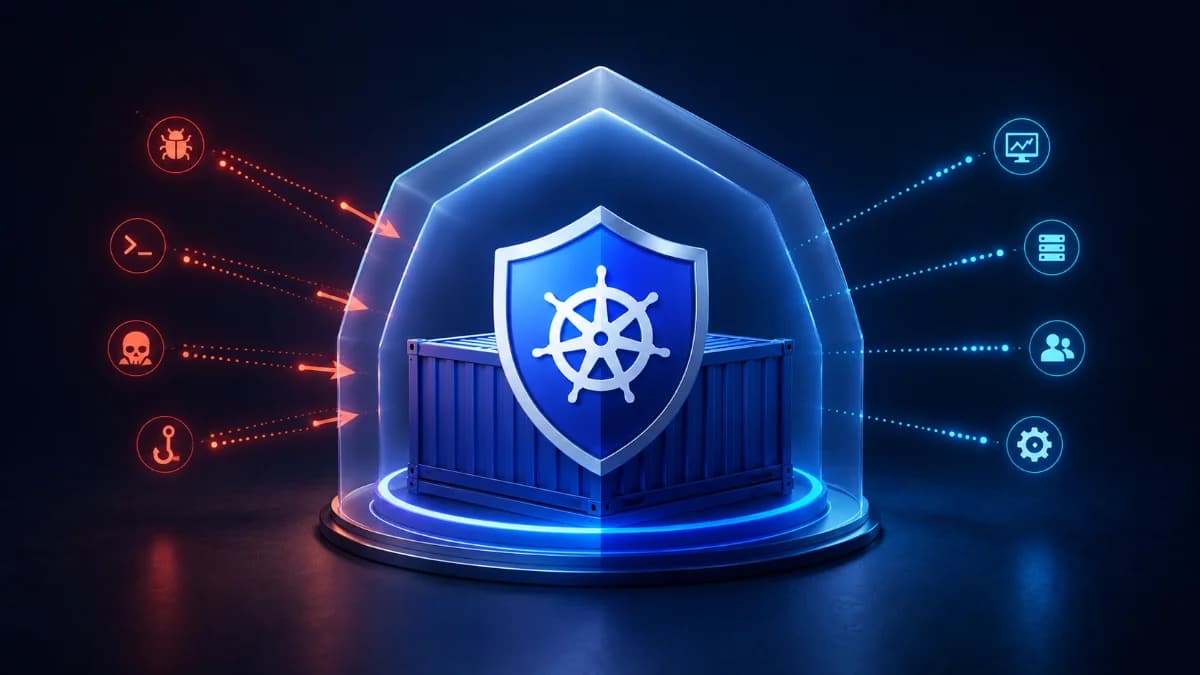
Learn why runtime security is critical for Kubernetes, how attackers operate after gaining access, and how ShieldNet Defense helps detect and stop threats in real time.
Kubernetes adoption is growing faster than Kubernetes security
Organizations are rapidly moving applications, APIs, and business services to Kubernetes.
The benefits are obvious:
- Faster deployment
- Better scalability
- Improved resource utilization
- Cloud-native flexibility
However, while Kubernetes adoption has accelerated, security strategies have not always kept pace.
Many organizations invest heavily in:
- Web Application Firewalls (WAF)
- Vulnerability scanners
- Identity management
- Cloud security posture management
Yet they often overlook a critical question:
What happens if an attacker successfully gets inside a Kubernetes workload?
This is where runtime security becomes essential.
What is Kubernetes runtime security?
Kubernetes runtime security focuses on monitoring and protecting workloads while they are actively running.
Unlike preventive security controls that attempt to stop attacks before they happen, runtime security assumes:
Some attacks will eventually succeed.
Its role is to detect and respond when suspicious activity occurs inside containers, pods, or Kubernetes nodes.
Runtime security helps answer questions such as:
- Is a webshell running inside a container?
- Has an attacker deployed a backdoor?
- Is a workload communicating with a command-and-control server?
- Is a container executing unexpected commands?
These are activities traditional security controls may not see.
Why prevention alone is not enough
Many organizations believe that deploying security tools automatically means they are protected.
But attackers continuously evolve.
Common examples include:
- Zero-day vulnerabilities
- Stolen credentials
- Misconfigurations
- Supply-chain attacks
- WAF bypass techniques
Once attackers gain access, they no longer need to attack from the outside.
Instead, they operate from inside the environment.
At this stage:
- Firewalls become less effective
- WAFs may no longer provide visibility
- Traditional monitoring often misses attacker activity
The attack has moved into runtime.
A typical Kubernetes attack lifecycle
Let's examine a common attack scenario.
Step 1: Initial compromise
An attacker exploits a vulnerable application.
This may involve:
- Remote code execution
- Command injection
- Vulnerable third-party components
Step 2: Access to a container
The attacker gains execution capability inside a workload.
This is often where many security controls stop providing visibility.
Step 3: Webshell or backdoor deployment
The attacker establishes persistence.
Examples include:
- Webshells
- Reverse shells
- Backdoor processes
Step 4: Command and control communication
The compromised workload starts communicating with external infrastructure.
This allows attackers to:
- Execute commands remotely
- Transfer files
- Maintain access
Step 5: Business impact
The attacker may then:
- Steal sensitive data
- Deploy ransomware
- Move laterally
- Disrupt operations
By the time the issue becomes visible to users, significant damage may already have occurred.
Runtime security focuses on attacker behavior
Traditional security often looks for known attack signatures.
Runtime security focuses on behavior.
Examples include:
Suspicious process activity
- Shell execution inside application containers
- Unauthorized binaries
- Reverse shells
File system activity
- Webshell creation
- Malicious file modifications
- Persistence mechanisms
Network activity
- C2 communications
- Connections to suspicious destinations
- Unexpected outbound traffic
Container behavior
- Privilege escalation attempts
- Container escape techniques
- Unusual workload activity
These signals help identify attacks even when the specific malware or exploit is previously unknown.
Why runtime security is especially important for Kubernetes
Kubernetes environments are dynamic.
Containers are:
- Created
- Destroyed
- Scaled
- Replaced
continuously.
Traditional endpoint security tools were not designed for this environment.
Organizations need security that understands:
- Pods
- Containers
- Namespaces
- Nodes
- Kubernetes workloads
Runtime security provides visibility where conventional tools often struggle.
Use ShieldNet Defense now to get Kubernetes Runtime Security Monitoring: https://shieldnet360.com/products/defense/start-free-trial
Benefits of runtime security for businesses
Organizations that implement Kubernetes runtime security gain:
- Faster threat detection
- Better visibility inside workloads
- Reduced incident response time
- Lower business risk
- Improved resilience against modern attacks
Most importantly, runtime security helps organizations detect attacks that have already bypassed preventive controls.
Frequently Asked Questions
What is Kubernetes runtime security?
Runtime security monitors workloads while they are running and helps detect attacks occurring inside Kubernetes environments.
Is runtime security the same as a WAF?
No. WAF protects applications from external attacks. Runtime security protects workloads after attackers gain access.
Why do Kubernetes environments need runtime protection?
Because attackers may still exploit vulnerabilities, steal credentials, or bypass preventive controls.
Can runtime security detect webshells?
Yes. Runtime security can detect suspicious shell execution, webshell deployment, and related attacker activity.
Related Articles

Oct 9, 2026
I replied to a phishing email. Am I at risk?
Replied to a phishing email? Learn what risks you face, what attackers can learn from your reply, and what to do next to protect your account and business.

Oct 8, 2026
Real or Fake? How to verify a sharepoint file invitation
Received a SharePoint file invitation? Learn how to spot fake SharePoint emails, verify shared files safely, and protect your Microsoft 365 account from phishing.

Oct 1, 2026
I paid a fake invoice. What should my business do?
Paid a fake invoice? Learn what your business should do immediately to contact the bank, preserve evidence, secure accounts, investigate the fraud, and reduce further losses.

Protect your business with ShieldNet 360
Get started and learn how ShieldNet 360 can support your business.