
Apr 9, 2026
BlogHow does AI threat detection work in real SOC workflows
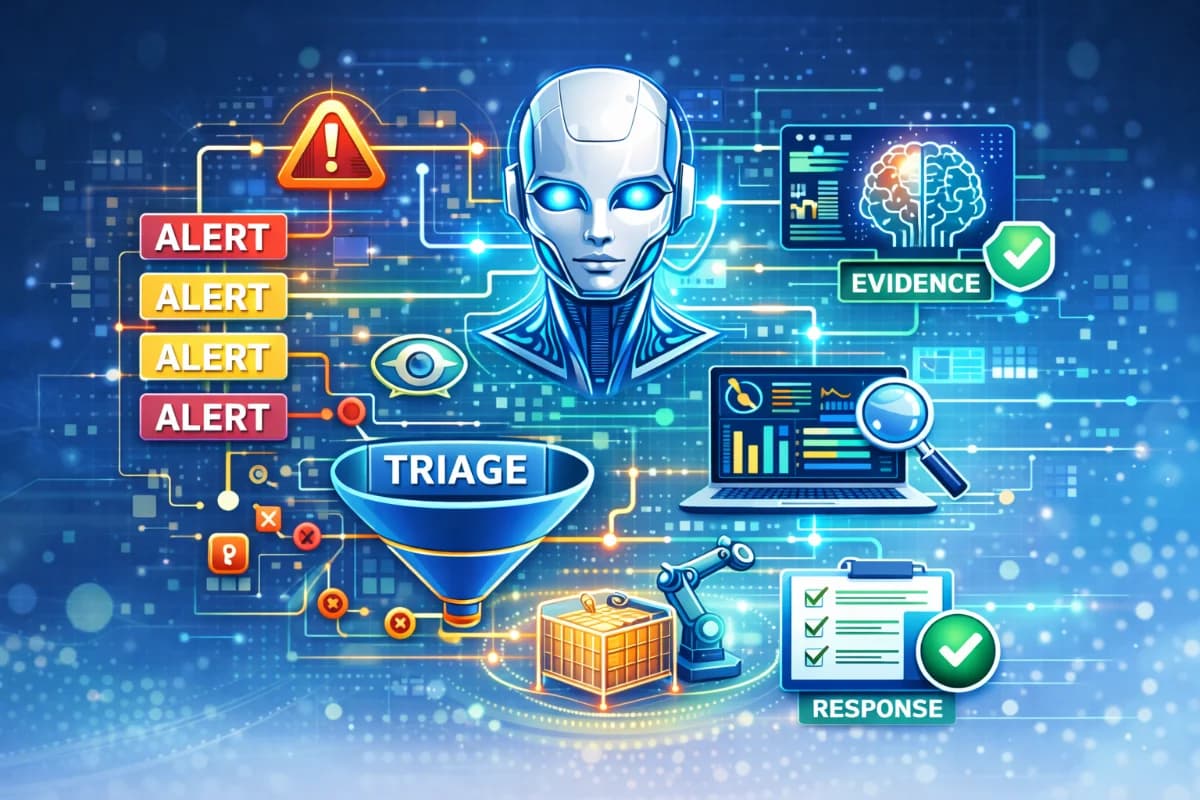
How does AI threat detection work for SMEs? Learn AI-driven detection, alert triage automation, false positive reduction, and response orchestration to cut response time.
If you are asking how AI threat detection work in real SOC workflows does, the short answer is this: AI helps a lean security team turn scattered signals into a single, decision-ready incident faster. It does that by collecting data from key systems, correlating related events, ranking confidence, and reducing noise so responders focus on what matters. AI-driven detection does not replace good security basics or human judgment, but it can dramatically improve speed when it is used as part of a workflow. In this article you will see the practical steps from data sources to correlation and alert triage automation, plus how false positive reduction and response orchestration shrink time to response.
Why this topic matters
SME security failures are often workflow failures, not tool failures. An organization might own strong security tools, but still respond late because alerts are fragmented and triage is inconsistent, especially after hours. Attackers exploit that delay to expand access, move laterally, and cause downtime or fraud. When the workflow is slow, time to respond becomes the biggest cost driver, not the technology.
A realistic example is email and identity compromise. A new device login, a mailbox forwarding rule, and unusual downloads might appear as three separate medium alerts across different systems. A human must notice the pattern, gather context, and decide containment steps, which can take hours. AI threat detection helps by correlating these events into one incident, summarizing the story, and enabling faster containment decisions. That is how you improve time to response without hiring night shift analysts.
Key factors and features to consider
Data sources are the fuel of AI-driven detection
AI-driven detection is only as good as the data it sees. In real SOC workflows, the most useful sources are identity sign-ins, email activity, endpoint behavior, and key cloud and SaaS audit logs. These sources capture both attacker entry points and the actions that follow. If a platform cannot see identity and email, it will miss many common SME incidents like account takeover and invoice fraud.
The practical test is simple. If a finance account is compromised tonight, can the system see the login, the permission or rule changes, and the unusual data access in one incident view by morning. If the answer is no, AI will look smart in demos but weak in real outcomes. Good data coverage is the first requirement for trust.
Correlation turns many alerts into one incident
Correlation is the step where AI becomes operationally valuable. Instead of treating each alert as separate, the system links events by user, device, workload, time window, and likely intent. That creates an incident that looks like a story, not a pile of messages. Correlation is also the main lever for false positive reduction because it prevents single noisy signals from escalating alone.
In practice, correlation should answer what is connected and why. It should group related evidence, highlight what changed recently, and show a timeline. For example, a new login plus a mailbox rule plus a spike in downloads within ten minutes is more meaningful than any single event. This is where AI shifts the workflow from reactive to structured.
Alert triage automation makes the first 15 minutes consistent
Alert triage automation is the step that assigns priority and routes work. A good SOC workflow needs predictable triage, otherwise the same event might be ignored one day and escalated the next. AI helps by scoring severity using context like user privilege, asset criticality, and whether multiple signals confirm the same pattern. It also packages evidence so a responder can decide quickly.
A triage output should be readable by a non-specialist. It should state what happened, likely impact, what the system already did, and what the responder should do next. This is where ShieldNet Defense can fit well: it can produce plain language incident summaries with evidence highlights and a timeline that supports quick decisions and executive updates. The goal is fewer tickets, higher clarity, and faster first containment.
False positive reduction is a process, not a promise
False positive reduction is not a single feature you turn on. It is the combination of baselining, correlation, suppression of known benign patterns, and continuous tuning. Baselining learns what normal looks like for a role or service, so routine automation and backups do not look like attacks. Correlation ensures that single anomalies do not trigger critical pages. Suppression and allowlists remove recurring noise that has been validated as safe.
A practical metric is alert to incident conversion rate. If the platform produces many alerts but very few true incidents, responders will lose trust and time to respond will get worse. A good program aims for fewer, higher confidence incidents, with an easy review loop to refine rules monthly. This is how AI becomes more accurate for your environment over time.
Response orchestration closes the loop from detection to action
Response orchestration is how tools work together to contain an incident quickly. In real SOC workflows, the first containment actions are often cross-system: revoke sessions in identity, quarantine a message in email, isolate an endpoint, or restrict a risky account temporarily. If the platform cannot orchestrate actions, responders still waste time switching tools and copying evidence across systems.
The goal is not to automate everything. The goal is to automate safe, reversible actions for high confidence incidents and to request approval for disruptive actions. When orchestration is configured with guardrails, it reduces attacker dwell time without causing self-inflicted outages. That is how AI improves time to response in a way leaders can support.
Detailed comparisons or explanations
How the workflow runs end to end in a real SOC
A practical SOC flow is detect, triage, contain, recover, and learn. AI impacts each step differently. Detection becomes faster because high signal patterns are recognized sooner across sources. Triage becomes consistent because incidents are grouped and scored with context. Containment becomes faster because response orchestration can trigger safe actions immediately. Recovery becomes cleaner because evidence and timelines are already captured.
The most important point is that AI is a workflow accelerator, not a replacement for ownership. Someone still owns the incident, validates impact, and decides on disruptive containment steps. AI helps that person start with a coherent incident story, not a blank screen. This is what makes an under 20 minute first containment goal realistic for SMEs.
What AI can do well and what it cannot do
AI can do well at repetitive, high volume tasks: correlation, enrichment, summarization, routing, and running safe playbooks. It can identify behavioral chains like suspicious login plus permission changes plus data access anomalies. It can also reduce noise by suppressing patterns that are normal for your environment. These are the areas where time to response improves most.
AI cannot compensate for missing telemetry or shared accounts that hide attribution. It cannot guarantee correctness in ambiguous cases without business context, such as a planned migration that looks unusual. It also cannot replace recovery readiness like tested backups and clear system ownership. The safest way to trust AI is staged automation: automate evidence and low risk actions first, then expand as false positive reduction stabilizes.
How to operationalize alerts with automation for lean teams
Lean teams need a simple mapping from confidence to action. Low confidence incidents should collect more evidence and notify quietly. Medium confidence incidents should require human review within a defined time window, with evidence pre-attached. High confidence incidents should trigger safe containment automatically, then notify the incident owner with a clear summary. This structure prevents alert fatigue while preserving speed.
Operationalizing also means measuring outcomes monthly. Track time to detect, time to first containment, MTTR, false positive rate, and after-hours coverage rate. Then make one tuning decision each month, such as adding a correlation rule or adjusting a threshold. ShieldNet Defense can support this by producing consistent incident timelines and action logs, making KPI tracking and executive reporting simpler for SMEs.
Best practices and recommendations
- Start with outcomes, not tools: define your top two incident types and your under 20 minute first containment goal
- Prioritize data sources: identity, email, endpoints, and critical cloud audit logs before anything else
- Implement alert triage automation: group alerts into incidents, add context, and route to a clear owner
- Use staged automation: evidence capture first, then safe containment, then approval-based disruptive actions
- Build false positive reduction into operations: monthly review, allowlists, and correlation improvements
- Standardize evidence packages: timeline, affected accounts, affected assets, actions taken, and next steps
To apply this in a small organization, run a 30 day pilot focused on one or two workflows such as account takeover and ransomware suspicion. Configure correlation to produce one incident per real pattern, not dozens of alerts. Enable only safe, reversible response orchestration actions like session revocation and email quarantine at first. Review the pilot results monthly and expand automation only when false positives are stable and low. This is how you gain speed without creating disruption.
FAQ
How does AI threat detection differ from traditional detection rules?
Traditional rules often look for a single match, like a known bad file or a specific indicator. AI threat detection focuses more on patterns and sequences across systems, such as identity plus email plus endpoint behavior within a time window. That improves context and reduces noise because the system can require multiple supporting signals. For SMEs, the benefit is fewer but clearer incidents that lead to faster containment decisions.
What data sources should we connect first for AI-driven detection?
Start with identity sign-ins and email activity, because many SME incidents begin with credential misuse and phishing. Add endpoint telemetry next to detect malware and stop ransomware-like spread. Then add critical cloud and SaaS audit logs for visibility into permission changes and data access. This order gives you the fastest improvement in time to response while keeping integration effort manageable.
How does AI reduce noise without missing real incidents?
AI reduces noise primarily through correlation and baselining. Correlation prevents single anomalies from escalating unless multiple signals support the same incident story. Baselining learns which behaviors are normal for a role or service, so routine automation does not look like an attack. A monthly tuning loop then improves false positive reduction by refining thresholds and allowlists based on real outcomes.
When should we allow response orchestration to take automatic action?
Allow automatic action when confidence is high, the action is reversible, and the blast radius is small. Examples include revoking a suspicious session, forcing re-authentication, quarantining a specific email, or isolating a single endpoint. Keep disruptive actions such as disabling critical accounts or blocking broad domains behind approvals until you have stable false positive reduction. This staged approach protects operations while improving speed.
Where does ShieldNet Defense fit in real SOC workflows?
ShieldNet Defense can fit as an AI-first layer that turns multi-source alerts into plain language incidents with evidence timelines and recommended actions. It supports alert triage automation by grouping related signals and reducing noise, and it supports response orchestration through safe, guardrailed containment steps. For SMEs, this can make an under 20 minute first containment goal more realistic without adding analysts. Evaluate it on evidence clarity, false positives, and measurable time to response outcomes.
Conclusion
To answer how does AI threat detection work in real SOC workflows, think of it as a system that collects signals, correlates them into incidents, reduces noise, and helps execute safe containment faster. AI-driven detection is strongest when telemetry is rich, correlation is clear, and alert triage automation produces decision-ready summaries. It should be trusted gradually using staged response orchestration and a disciplined false positive reduction process. If you focus on a small set of KPIs like time to detect, time to first containment, and MTTR, you can measure real improvement month over month. For lean teams, a platform like ShieldNet Defense can help by producing clear incident narratives and safe actions that shorten time to response without disrupting business operations.
Related Articles
Apr 8, 2026
Automated incident response: workflows and SME KPIs in 2026
Automated incident response for SMEs: SOAR workflow, playbooks and runbooks, alert triage automation, and KPIs for MTTD and MTTR with pitfalls to avoid.
Apr 8, 2026
Container security monitoring: Signals, alerts, automation
Container security monitoring: actionable signals, container runtime telemetry, Kubernetes security, cloud workload protection, and automated containment.
Apr 7, 2026
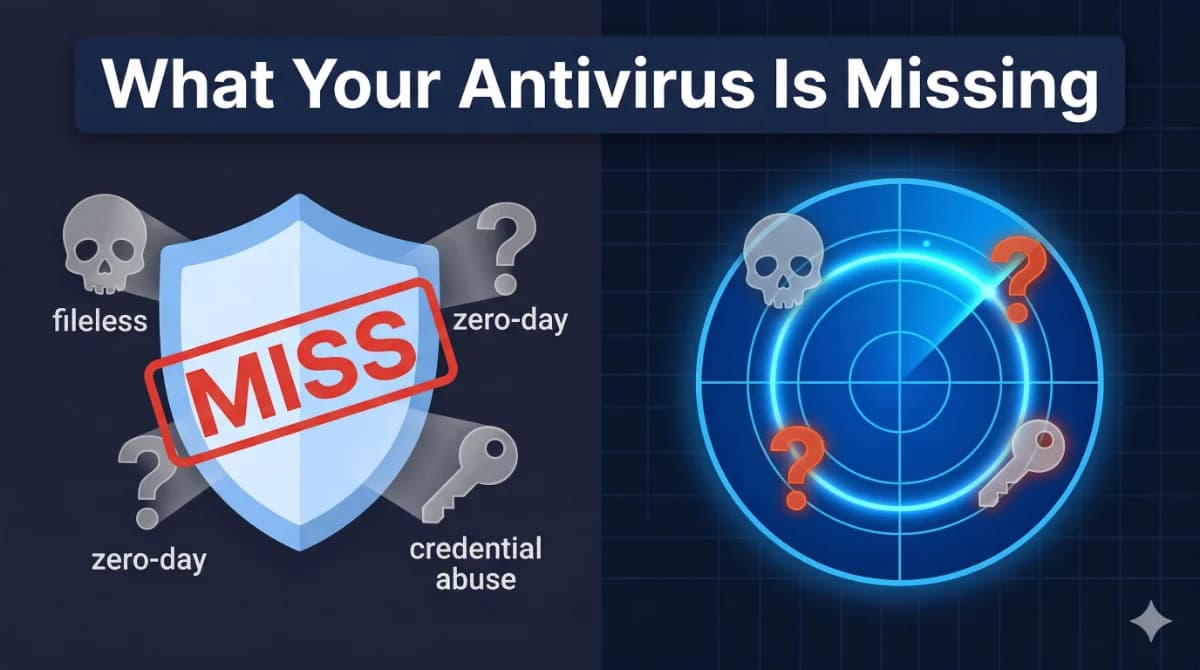
Endpoint Malware Detection: What Antivirus Misses (SME Edition)
Learn what traditional antivirus misses and why behavioral detection and EDR are essential for SME endpoint malware protection in 2025.