
Mar 27, 2026
BlogReal-time threat detection: how it works without hiring analysts
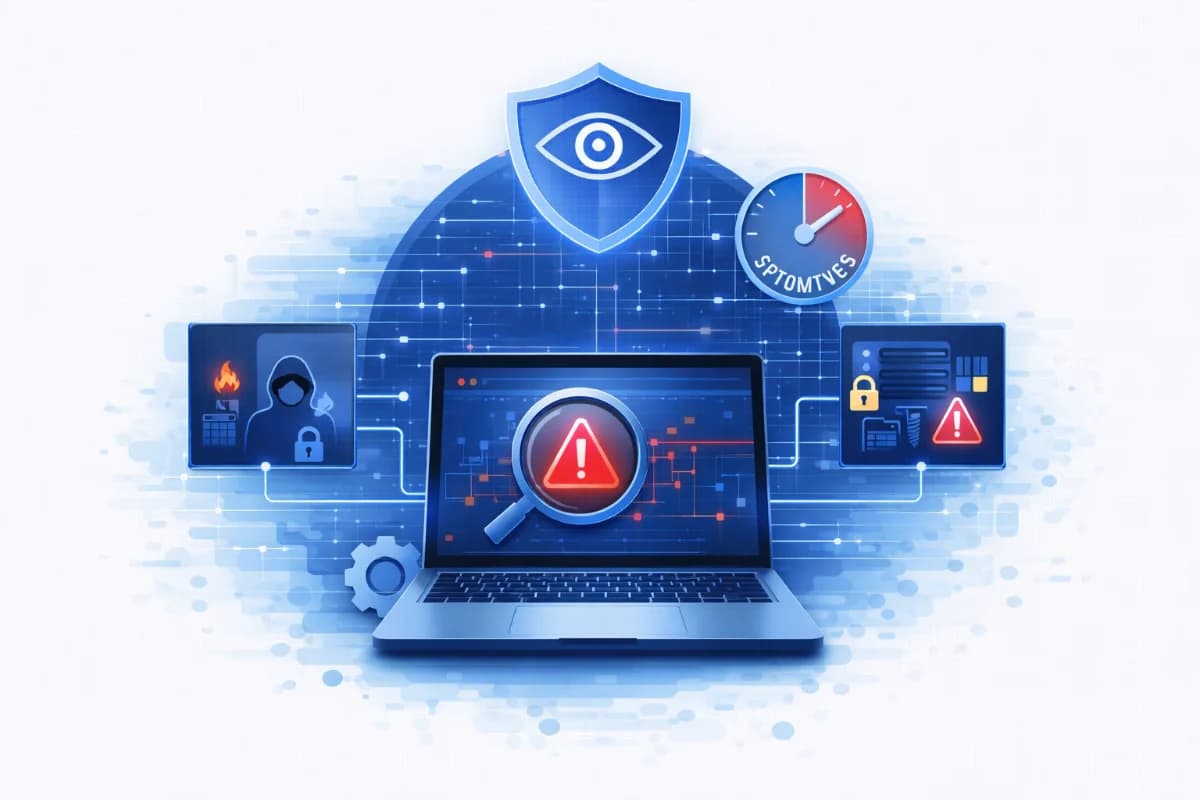
Real-time threat detection for SMEs: behavior-based detection, suspicious activity detection, and threat investigation with minutes-level flagging without hiring analysts.
Real-time threat detection means your security controls can flag suspicious behavior within minutes, not hours or days, so you can contain incidents before they turn into downtime or data loss. For SMEs, the challenge is not knowing what “real-time” really means and how you can achieve it without hiring analysts to watch dashboards all day. The practical answer is a combination of behavior-based detection, smart correlation across signals, and streamlined threat investigation workflows that turn alerts into plain-language incidents. This guide explains behavioral detection versus signature-based detection, what minutes-level flagging looks like in practice, and how lean teams can use automation to respond faster without adding headcount.
Why this topic matters
Real-time threat detection matters because attackers move fast, and the cost of delay compounds. A credential stolen in the morning can become a mailbox rule, a data export, and a payment fraud attempt by lunchtime. A ransomware infection can spread laterally across shared folders in minutes if permissions are broad. SMEs often discover these incidents late because they rely on user reports or periodic checks, not continuous suspicious activity detection.
A realistic scenario is an employee account takeover in cloud email. The attacker logs in from an unfamiliar device, creates forwarding rules, and downloads a large set of attachments. If your system flags the login but nobody investigates until the next day, the attacker has time to reset passwords elsewhere and target finance workflows. Real-time threat detection shortens that window by triggering minutes-level flagging when multiple behaviors align, allowing the SME to revoke sessions and stop the chain early. This is how detection becomes a business continuity tool rather than a compliance checkbox.
Key factors and features to consider
Signature-based detection: fast for known threats, limited for new tricks
Signature-based detection looks for known patterns, such as specific malware hashes, known malicious domains, or recognized exploit indicators. It is effective and efficient for threats that have already been observed and cataloged. For SMEs, signature-based detection is useful as a baseline because it can block common malware and known phishing infrastructure quickly. The limitation is that attackers constantly change their tools, so signatures can miss new variants or “living off the land” attacks that use legitimate tools.
Behavior-based detection: catch suspicious activity even when it’s “new”
Behavior-based detection focuses on actions and sequences that are abnormal or risky, rather than matching a known signature. It looks for patterns like impossible travel sign-ins, new device logins followed by permission changes, unusual data downloads, or internal scanning. SMEs benefit because attackers often reuse behaviors even when they change malware. The key is building a baseline of normal activity and defining behaviors that indicate meaningful risk, which is the essence of suspicious activity detection.
Minutes-level flagging: what “real-time” should mean operationally
Minutes-level flagging does not mean “zero delay,” but it should mean a predictable detection-to-notification path measured in minutes. For SMEs, this usually requires continuous telemetry from identity, email, endpoints, and cloud apps, plus correlation rules that reduce noise. A single signal may not justify action, but multiple signals within a short window should trigger a high-confidence incident. The best real-time threat detection systems also capture evidence automatically, so threat investigation begins with context rather than guesswork.
Threat investigation for lean teams: from alerts to a single incident story
Threat investigation is the process of confirming what happened, scoping impact, and deciding containment steps. Lean SMEs cannot afford deep manual investigation for every alert, so the workflow must be simplified. Good systems group related alerts into one incident, enrich with context like user role and asset criticality, and provide a plain-language summary with recommended next actions. This reduces time-to-triage and makes response feasible without dedicated analysts.
Correlation and prioritization: reducing noise while staying fast
Real-time threat detection fails when alert volume overwhelms the team. Correlation means linking signals across systems to create fewer, higher-quality incidents, while prioritization means ranking incidents by likely business impact. For example, a suspicious sign-in for a finance account is more urgent than for a low-privilege account, and an unusual download from a sensitive folder is more urgent than a benign sync spike. SMEs should evaluate whether their detection approach produces actionable incidents rather than raw alerts.
Detailed comparisons or explanations
Behavioral detection vs signature-based detection: how they complement each other
Behavioral detection and signature-based detection are not competitors; they complement each other. Signature-based detection is strong at quickly identifying known bad artifacts, which reduces commodity threats with low effort. Behavior-based detection is strong at catching new, modified, or stealthy attacks that do not match known signatures. For SMEs, the best approach is layered: use signature-based detection to reduce background noise, then use behavior-based detection to catch high-risk sequences like account takeover or lateral movement.
A practical example is phishing leading to account takeover. Signature-based tools may flag known malicious links, but if the attacker uses a new domain or a legitimate cloud service, signatures may miss it. Behavior-based detection can still flag suspicious activity: login from a new device, mailbox rule creation, and unusual attachment downloads in a short window. When both methods are combined, minutes-level flagging becomes more reliable and false positives decrease. That is how real-time threat detection becomes usable for lean teams.
What minutes-level flagging looks like in real incidents
Minutes-level flagging typically relies on triggers that are both time-bound and context-aware. A single unusual sign-in might produce a low-severity alert, but if it is followed within 5–15 minutes by privilege changes or mass download activity, severity should escalate. Similarly, an endpoint might show a new process, but if it is followed by unusual outbound connections or file encryption-like behavior, the system should flag it immediately. SMEs should focus on these “chains of evidence” because they provide higher confidence than isolated signals.
To make this work, the system must capture evidence automatically during detection. That includes sign-in history, device fingerprints, mailbox rule changes, file access logs, and endpoint telemetry relevant to the event. When evidence is attached automatically, threat investigation becomes faster because responders do not need to hunt across tools. This is how SMEs get real-time threat detection outcomes without hiring analysts: automation does the evidence collection and correlation so humans only make decisions on the highest-risk incidents.
How to implement real-time detection without adding headcount
SMEs can implement real-time threat detection by focusing on a small set of high-impact behaviors and automating the response workflow. Start by identifying top incident types: account takeover, ransomware propagation, sensitive data exposure, and malware on endpoints. Then ensure telemetry is available for those incidents and build correlation rules that produce a single incident when multiple signals align. Finally, define safe response actions that can be executed quickly, such as revoking sessions and forcing re-authentication, and reserve disruptive actions for approval.
A key point is to avoid over-alerting. SMEs should tune thresholds based on device roles and business context, and maintain allowlists for known services to reduce noise. If alert fatigue returns, minutes-level flagging becomes meaningless because nobody trusts or acts on alerts. A practical real-time threat detection program is one where the team sees a small number of high-confidence incidents per week and can respond within minutes for the most critical cases. That is achievable without hiring analysts if workflows and automation are designed well.
Best practices and recommendations
- Use both signature-based detection and behavior-based detection to balance coverage and confidence
- Define 3–5 high-impact suspicious activity detection chains, such as account takeover sequences and ransomware-like behavior
- Ensure telemetry covers identity, email, endpoints, and sensitive data access so evidence can be captured automatically
- Implement correlation rules with time windows to enable minutes-level flagging without spamming alerts
- Build a lean threat investigation workflow: one incident view, evidence attached, and recommended next steps
- Automate safe containment actions first and require approvals for disruptive actions
To apply this, SMEs should start with one or two incident chains and tune them for two to four weeks. Measure false positives and adjust baselines until alert volume is manageable. Then add safe automation steps such as session revocation, message quarantine, and ticket creation with evidence. Keep response ownership clear so incidents do not stall in an inbox. Over time, your detection becomes more accurate and faster because baselines improve and playbooks become routine.
- Example chains for behavior-based detection: new device login + mailbox rule change + unusual downloads; multiple failed logins + successful login + privilege change
- Example endpoint chains: unusual process + outbound to new destination + rapid file modifications; suspicious script execution + credential access attempts
- Evidence artifacts to store: timeline, affected accounts, devices involved, actions taken, and remediation tasks
These examples show how suspicious activity detection becomes practical. Chains reduce noise because they require multiple supporting signals, which increases confidence. Endpoint chains focus on sequences that commonly indicate compromise without relying on a specific malware signature. Evidence artifacts make threat investigation explainable and auditable, which is important for SMEs that must report to customers or partners. When these pieces are in place, real-time threat detection becomes operational rather than aspirational.
FAQ
Is real-time threat detection possible without a dedicated SOC team?
Yes, real-time threat detection is possible for SMEs without a dedicated SOC team if workflows are automated and incident volume is controlled. The key is to use correlation and behavior-based detection so you get fewer, higher-confidence incidents instead of thousands of raw alerts. Automation should collect evidence and recommend actions so responders can act quickly. Humans still make decisions, but they only handle the incidents that truly matter.
What is the main difference between behavior-based detection and signature-based detection?
Signature-based detection matches known bad artifacts like malware hashes or known malicious domains, making it effective for known threats. Behavior-based detection looks for abnormal or risky sequences of actions, so it can catch new or modified attacks that do not match signatures. SMEs should use both because signatures reduce commodity noise while behaviors catch stealthy incidents. The best programs use behaviors to trigger minutes-level flagging when multiple signals align.
How fast is “minutes-level flagging” in practice?
In practice, minutes-level flagging often means an incident is detected and escalated within roughly 1–15 minutes, depending on telemetry and correlation rules. Some signals may be near-instant, while others require short aggregation windows to confirm patterns. SMEs should focus on predictable escalation for high-risk chains rather than expecting zero delay. The operational goal is to reduce attacker dwell time, not to eliminate every second of latency.
How can SMEs reduce false positives in suspicious activity detection?
Reduce false positives by establishing baselines per device role, using allowlists for known services, and requiring multiple signals before escalation. Use time-bound correlation so single noisy events do not trigger high severity. Review false positives monthly and refine thresholds based on real investigations. This tuning process is what makes behavior-based detection trustworthy for lean teams.
What is the first step to improve threat investigation for SMEs?
The first step is to standardize evidence collection and incident grouping so responders start with context. Ensure alerts from identity, email, endpoints, and cloud services can be correlated into one incident view. Add a simple playbook that defines what to check and what safe actions to take in the first 15 minutes. When threat investigation begins with a coherent incident story, SMEs respond faster without adding headcount.
Conclusion
Real-time threat detection becomes achievable for SMEs without hiring analysts when signature-based detection and behavior-based detection are combined with correlation and automation. Minutes-level flagging relies on time-bound chains of suspicious activity detection, evidence collected automatically, and a lean threat investigation workflow that turns alerts into plain-language incidents. Start small, tune for manageable alert volume, and automate safe containment actions to reduce attacker dwell time. If you want a practical next step, define two high-impact behavior chains, verify telemetry coverage, and build a playbook that enables consistent action within minutes.
Related Articles

Oct 9, 2026
I replied to a phishing email. Am I at risk?
Replied to a phishing email? Learn what risks you face, what attackers can learn from your reply, and what to do next to protect your account and business.
Oct 8, 2026
Real or Fake? How to verify a sharepoint file invitation
Received a SharePoint file invitation? Learn how to spot fake SharePoint emails, verify shared files safely, and protect your Microsoft 365 account from phishing.

Oct 1, 2026
I paid a fake invoice. What should my business do?
Paid a fake invoice? Learn what your business should do immediately to contact the bank, preserve evidence, secure accounts, investigate the fraud, and reduce further losses.